Craig McLeish Saw the Future of Work. Are YOU Ready For It?
Craig McLeish: The Prophet of Our Work Future?
Okay, let's be real. The future of work? It's kinda scary. I'm not going to lie. We're bombarded with headlines about AI taking our jobs, robots replacing humans, and the skills gap widening into a chasm. But amidst all this noise, there are people who've been sounding the alarm for years. People like Craig McLeish.
Who is Craig McLeish, you ask? He's not some Silicon Valley guru or a talking head on TV. He’s been in the trenches, thinking deeply about where technology is taking us. And what I find especially compelling is his focus on the *human* element. Not just the code, not just the algorithms, but what it all *means* for us, for our jobs, our lives, our sense of purpose.
So, What Exactly Did Craig McLeish See Coming?
McLeish has been talking about the rise of automation and AI long before it became the trendy topic it is today. He wasn't just predicting it; he was thinking through the *implications* for real people. Think about the rise of no-code platforms in 2025. Suddenly, people who never considered themselves "techies" could build apps and automate tasks. McLeish understood that this shift would democratize technology, but also that it would force us to redefine what "work" actually means.
I remember reading one of his interviews from early 2024 where he said something that really stuck with me: "We need to stop thinking about jobs as fixed roles and start thinking about skills as fluid assets." That was before the big AI boom of late 2024 and 2025, but it's even more relevant today.
The Robots Are Coming! (But It's Not *All* Bad)
Okay, you know what scares me? The thought of millions of people suddenly displaced by AI with no clear path forward. In fact, recent reports from the World Economic Forum (March 2026) estimate that nearly 85 million jobs could be displaced by automation by 2030. That’s a HUGE number. And I've seen it firsthand. My friend, a graphic designer for 15 years, lost his job in late 2025 because his company started using AI-powered design tools. He's talented, creative, and dedicated, but he couldn't compete with the speed and cost-effectiveness of the AI.
But here's the good news: McLeish, and others who think like him, believe that this disruption also creates massive *opportunities*. New jobs will emerge. Existing jobs will evolve. The key is to be proactive, to anticipate the changes, and to develop the skills that will be in demand in the future.
What Skills Will Matter in the Age of AI?
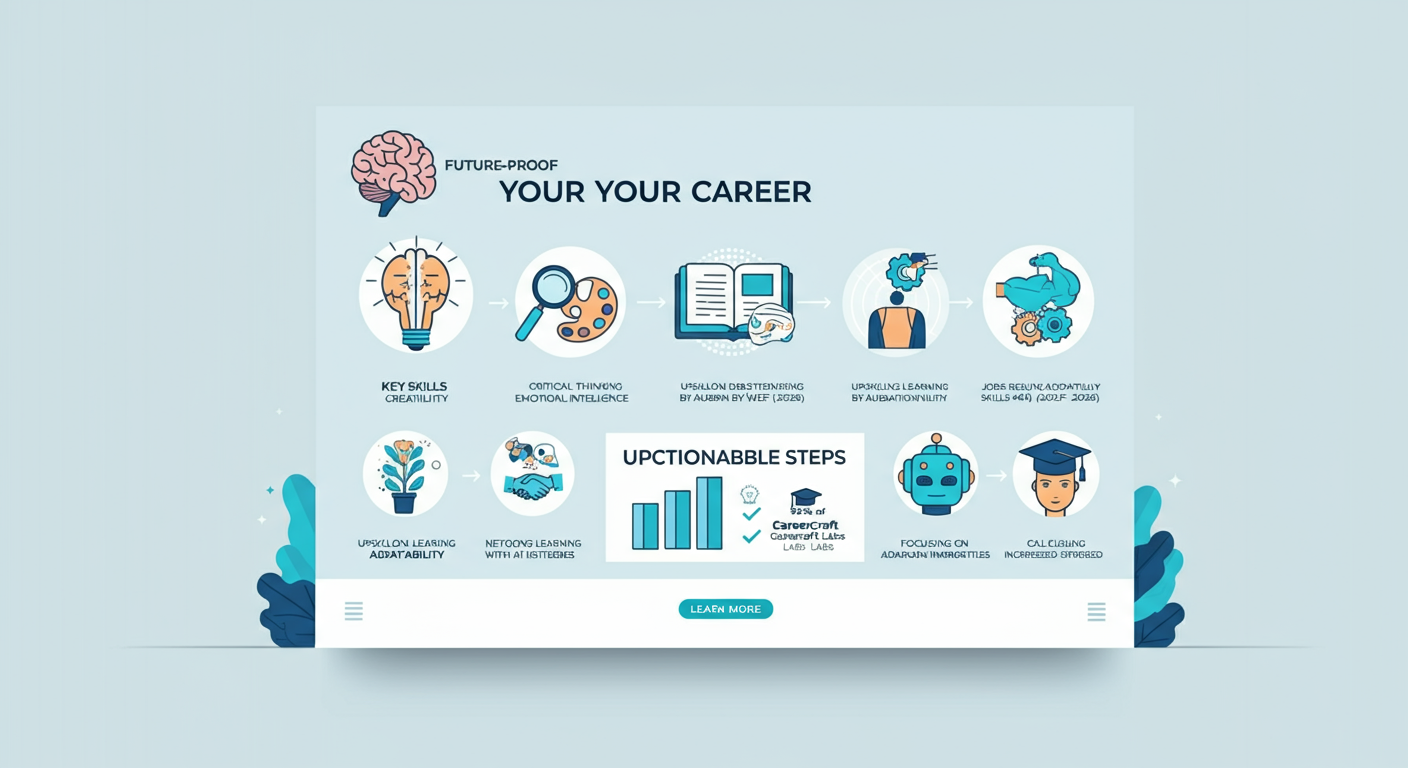
This is the million-dollar question, isn't it? What do we need to *learn* to stay relevant? According to McLeish, it's not just about technical skills. It's about developing uniquely human skills like:
- Critical Thinking: AI can process data, but it can't truly *think* critically. We need to be able to analyze information, identify biases, and make sound judgments.
- Creativity: AI can generate content, but it can't truly *create*. We need to be able to come up with new ideas, solve problems in innovative ways, and express ourselves through art, music, and writing.
- Emotional Intelligence: AI can understand emotions, but it can't truly *empathize*. We need to be able to connect with others, build relationships, and lead with compassion.
- Adaptability: The only constant is change. We need to be able to learn new things quickly, adapt to new situations, and embrace ambiguity.
These are the skills that AI can't easily replicate. These are the skills that will make us valuable in the future of work. And honestly, these are the skills that make us *human*.
So, What Can You Do *Today* to Prepare?
Okay, I get it. This all sounds a bit overwhelming. But don't panic! There are things you can do *today* to prepare for the future of work. Here's my advice:
- Identify Your Skills Gap: What skills do you need to develop to stay relevant in your field? Be honest with yourself.
- Embrace Lifelong Learning: The days of getting a degree and then coasting are over. You need to be constantly learning new things.
- Network, Network, Network: Connect with people in your industry. Attend conferences, join online communities, and build relationships.
- Experiment with AI Tools: Don't be afraid of AI. Embrace it! Experiment with different AI tools and see how they can help you be more productive and creative.
- Focus on Your Strengths: What are you good at? What do you enjoy doing? Focus on developing your strengths and finding ways to use them in the new economy.
CareerCraft Labs: Your Partner in Navigating the Future
Look, this stuff isn't easy to figure out on your own. That's why I'm so excited about what's happening at CareerCraft Labs. They're not just teaching skills; they're helping people *reinvent* themselves for the future of work. They offer courses on everything from AI and machine learning to critical thinking and creativity. They have a fantastic community of learners and mentors. And they're constantly updating their curriculum to reflect the latest trends and developments.
I honestly believe that CareerCraft Labs is a valuable resource for anyone who wants to thrive in the age of AI. So, if you're feeling anxious about the future of work, or if you're simply looking to upskill and stay ahead of the curve, I encourage you to check them out.
The future of work is uncertain, yes. But it's also full of potential. By embracing lifelong learning, developing uniquely human skills, and connecting with a supportive community, we can navigate the challenges and create a brighter future for ourselves and for generations to come. Let's face it, the future isn't something that happens *to* us, but something we *build*!
Ready to Level Up Your Career?
Explore expert-led courses in AI, Data Science, Power BI, and more.
Browse Courses