Life Science Fundamentals: Classification, Plant Life, Digestion, Excretion, Coordination, Reproduction and Useful Microbes
Plant Life: Photosynthesis, Transport and Hormones
Photosynthesis is the making of glucose from carbon dioxide and water using light absorbed by chlorophyll in the chloroplast: 6CO₂ + 6H₂O → C₆H₁₂O₆ + 6O₂. The oxygen released comes from the water and not from the carbon dioxide, a point the question likes. The light reactions need light and make ATP and splitting of water; the carbon-fixing reactions use that ATP to build sugar. Carbon dioxide enters by the stomata, pores in the leaf surface that are opened and closed by the guard cells. Leaves of a plant kept in the dark and then tested with iodine do not turn blue-black, because they have no starch.
- Transpiration is the loss of water vapour, mainly through stomata; it cools the plant and its pull draws water up the xylem, the tissue that carries water and minerals upward. The phloem carries the food made in the leaves to all parts, in both directions, by translocation.
- Respiration in plants goes on day and night; photosynthesis only in light. Roots take up minerals as ions, and water enters them by osmosis.
- Tropisms are growth movements in response to a stimulus: the shoot bends towards light (positive phototropism), the root grows down with gravity (positive geotropism), and a tendril coils on contact (thigmotropism).
| Hormone | Chief effects |
|---|---|
| Auxin | Cell elongation, phototropism, apical dominance (the tip suppresses side buds), rooting of cuttings |
| Gibberellin | Stem elongation, breaking dormancy and germination; larger seedless grapes |
| Cytokinin | Cell division; delays ageing of leaves; works with auxin |
| Abscisic acid | The stress hormone: closes stomata in drought, maintains seed dormancy |
| Ethylene | A gas that ripens fruit and promotes shedding of leaves and fruit |
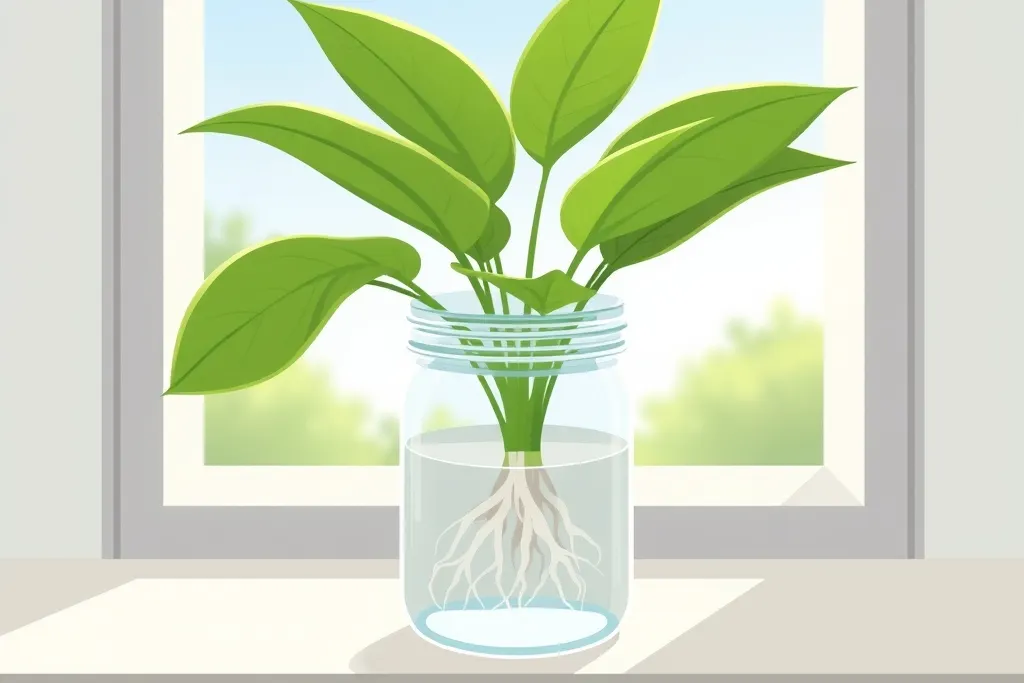
Photosynthesis is the making of glucose from carbon dioxide and water using light absorbed by chlorophyll in the chloroplast: 6CO₂ + 6H₂O → C₆H₁₂O₆ + 6O₂. The oxygen released comes from the…
Reproduction in Plants: Vegetative Propagation, Flowers, Pollination and Seeds
Plants reproduce asexually, without gametes, and sexually, through flowers. Asexual methods give offspring identical to the parent: vegetative propagation by cutting (rose, sugarcane), layering (jasmine), grafting (mango, apple) and from special parts such as the tuber (potato), bulb (onion), runner (grass) and the leaf buds of Bryophyllum; budding in yeast and Hydra; fission in bacteria; spores in fungi and ferns; and tissue culture from a few cells in a nutrient medium, used to multiply orchids and disease-free plants.
| Part | Role | What it becomes |
|---|---|---|
| Sepals and petals | Protect the bud; attract pollinators | Usually wither |
| Stamen (anther and filament) | Male: the anther makes pollen grains | Pollen, carrying the male gametes |
| Carpel (stigma, style, ovary) | Female: the stigma receives pollen, the ovary holds ovules | Ovary becomes the fruit; ovule becomes the seed |
- Pollination is the transfer of pollen from anther to stigma. It is self-pollination within one flower or plant and cross-pollination between plants of the same species, by wind (maize, wheat), insects (most showy, scented flowers), water, or birds and bats. Cross-pollination gives variation.
- Double fertilisation is peculiar to flowering plants: one male gamete fuses with the egg to form the zygote (becoming the embryo), and the other fuses with two polar nuclei to form the triploid endosperm, the food store of the seed.
- Germination needs water, oxygen and a suitable temperature, and not light for most seeds; the first root, the radicle, emerges before the shoot.
Plants reproduce asexually, without gametes, and sexually, through flowers. Asexual methods give offspring identical to the parent: vegetative propagation by cutting (rose, sugarcane)…
Digestion, Respiration and Excretion in Humans
Digestion breaks food into small molecules that can be absorbed; it starts in the mouth and the order of the juices is the most asked part. Saliva has the enzyme amylase that begins the digestion of starch to sugar. In the stomach, hydrochloric acid makes a strongly acid medium and the enzyme pepsin digests protein. In the small intestine, bile from the liver (stored in the gall bladder) does not contain an enzyme but breaks fat into droplets (emulsification) and makes the medium alkaline, and the pancreatic juice carries trypsin (protein), lipase (fat) and amylase (starch); the intestinal juice completes the work. The finger-like villi of the small intestine absorb the products, and the large intestine absorbs water.
| Place | Juice and enzyme | Acts on |
|---|---|---|
| Mouth | Saliva: salivary amylase | Starch to maltose |
| Stomach | Gastric juice: HCl and pepsin | Protein to peptides |
| Small intestine | Bile (no enzyme); pancreatic trypsin, lipase and amylase; intestinal juice | Fats, proteins and starch to fatty acids, amino acids and glucose |
Respiration releases energy from glucose in the cell. Aerobic respiration, C₆H₁₂O₆ + 6O₂ → 6CO₂ + 6H₂O + energy, yields about 36 to 38 molecules of ATP per glucose in the textbook count; anaerobic respiration yields only 2. In muscle under strain it ends in lactic acid, which gives cramp, and in yeast in ethanol and carbon dioxide, which is the basis of brewing and of bread rising. Air is exchanged in the alveoli of the lungs, a vast surface of thin-walled sacs with blood capillaries.
Excretion removes nitrogenous wastes. Ammonia from the breakdown of protein is converted to the less toxic urea in the liver, and the kidneys filter the blood. The working unit is the nephron, about a million in each kidney: blood is filtered in the glomerulus inside Bowman's capsule, useful substances such as glucose and most of the water are reabsorbed along the tubule, and what remains leaves as urine, usually 1 to 1.5 litres a day. When the kidneys fail, dialysis filters the blood through a membrane outside the body.
- MouthSaliva: amylase on starch
- StomachHydrochloric acid; pepsin on protein
- Small intestineBile, pancreatic juice; villi absorb
- Large intestineAbsorbs water
- Blood filtered in the glomerulusInside Bowman's capsule
- Glucose and most water reabsorbedAlong the tubule
- The rest leaves as urineUsually 1 to 1.5 litres a day
Digestion breaks food into small molecules that can be absorbed; it starts in the mouth and the order of the juices is the most asked part. Saliva has the enzyme amylase that begins the…
Coordination and Human Reproduction
The nervous system works by electrical impulses along neurons: the dendrites receive, the cell body processes, the axon carries the impulse away and passes it across a synapse by a chemical. The brain has three parts. The forebrain, mostly the cerebrum, handles thought, memory, speech and voluntary action; the cerebellum of the hindbrain keeps balance and coordinates movement; the medulla controls involuntary actions such as heartbeat, breathing and blood pressure. A reflex action is a rapid, automatic response that goes by the reflex arc: receptor, sensory neuron, spinal cord (not the brain), motor neuron and effector, as when the hand is pulled from a hot object.
- Hormones (the endocrine glands) carry slower, longer-lasting signals in the blood; the glands themselves are in the human-body chapter. A nerve impulse is fast and short-lived, a hormone slow and sustained, and the two work together.
- Fertilisation is the fusion of a sperm with an ovum, usually in the fallopian tube; the zygote divides as it moves down and is implanted in the wall of the uterus. The placenta links mother and embryo, supplying food and oxygen and removing waste, without mixing their blood. Gestation lasts about nine months.
- The menstrual cycle repeats about every 28 days from puberty, and ovulation falls in the middle of it. If the ovum is not fertilised the lining of the uterus is shed, and the cycle stops during pregnancy.
- Sex determination in humans: females have two X chromosomes (XX), males an X and a Y (XY). Every ovum carries an X, while a sperm carries X or Y, so it is the father's sperm that decides the sex of the child.
- Receptor
- Sensory neuron
- Spinal cordNot the brain
- Motor neuron
- EffectorHand pulled from a hot object
The nervous system works by electrical impulses along neurons: the dendrites receive, the cell body processes, the axon carries the impulse away and passes it across a synapse by a…
Useful Microbes: Fermentation, Antibiotics and Nitrogen Fixation
Disease-causing microbes are covered with the human body. This section is about those that work for us, a common source of short questions.
| Microbe | Use |
|---|---|
| Lactobacillus (bacterium) | Turns milk to curd by making lactic acid; also in yoghurt and in the gut |
| Yeast, Saccharomyces (fungus) | Ferments sugar to ethanol and carbon dioxide: bread, beer, wine |
| Penicillium (fungus) | Source of penicillin, the first antibiotic, noticed by Alexander Fleming in 1928 |
| Streptomyces (bacterium) | Source of streptomycin and several other antibiotics |
| Rhizobium (bacterium) | Lives in root nodules of legumes (pea, gram, bean) and fixes nitrogen from air into a usable form; this is why legumes enrich soil |
| Azotobacter, Anabaena, Azolla | Free-living or cyanobacterial nitrogen fixers; Azolla, a water fern with Anabaena, is used as a biofertiliser in rice fields |
| Methanogens (archaea) | Produce methane from cattle dung in a biogas plant (gobar gas) |
Disease-causing microbes are covered with the human body. This section is about those that work for us, a common source of short questions.
Comparison Corner: Kingdoms, Enzymes, Hormones, Fertilisation and Nitrogen Fixers
Life-science questions are mostly pairings: a kingdom and its features, an enzyme and its site, a hormone and its gland, a bacterium and its crop. Learn them as short comparison tables and test yourself on the confusable members.
| Item | Fact |
|---|---|
| Pepsin | Stomach, acidic medium, acts on protein |
| Trypsin | Small intestine, alkaline medium, protein |
| ADH (vasopressin) | Increases water reabsorption in the kidney |
| Insulin lack | Diabetes mellitus |
| Rhizobium / Azotobacter / Anabaena | Legume root nodules / free-living soil / paddy-field cyanobacterium |
| Pulmonary artery | Carries deoxygenated blood from the heart to the lungs |
Life-science questions are mostly pairings: a kingdom and its features, an enzyme and its site, a hormone and its gland, a bacterium and its crop. Learn them as short comparison tables and…
Key takeaways
- Binomial nomenclature is Linnaeus's; the ranks run kingdom, phylum, class, order, family, genus, species; Whittaker's five kingdoms are Monera, Protista, Fungi, Plantae and Animalia; whales and bats are mammals.
- Photosynthesis is 6CO₂ + 6H₂O → C₆H₁₂O₆ + 6O₂ with the oxygen from water; xylem carries water up and phloem carries food; auxin, gibberellin, cytokinin, abscisic acid and ethylene are the plant hormones.
- In flowering plants the ovule becomes the seed and the ovary the fruit; double fertilisation gives the zygote and the triploid endosperm; grafting and cuttings keep a variety true.
- Digestion runs amylase in the mouth, pepsin in the stomach, then bile, trypsin, lipase and amylase in the small intestine; bile has no enzyme; respiration gives about 36 to 38 ATP aerobically and 2 anaerobically.
- The nephron filters in the glomerulus and reabsorbs along the tubule; urea is made in the liver; a reflex arc passes through the spinal cord; the father's sperm decides the sex of the child.
- Lactobacillus makes curd, yeast makes bread and alcohol, Penicillium gave penicillin, Rhizobium in legume nodules fixes nitrogen and Azolla is a biofertiliser; methanogens give biogas.
Practice questions (25)
Attempt each one before opening the answer. Every explanation names the tempting wrong option as well as the right one, because that is where marks are lost.
Binomial nomenclature, the two-part scientific naming of species, was introduced by:
Show answer
Answer: A — Carolus Linnaeus
Linnaeus made the genus-plus-species name the standard. Darwin gave the theory of evolution, Mendel the laws of heredity and Whittaker the five-kingdom classification.Which of the following is a feature of a monocotyledonous plant?
Show answer
Answer: C — Parallel venation and fibrous roots
Monocots such as wheat and rice have one seed leaf, parallel-veined leaves and fibrous roots. The other three options describe dicots like pea and mango.Which animal is NOT an insect?
Show answer
Answer: C — Spider
A spider has eight legs and two body parts, so it is an arachnid; insects have six legs and three body parts. All four belong to the phylum Arthropoda.
Show the other 22 questions
In photosynthesis the oxygen released comes from:
Show answer
Answer: B — Water
The oxygen comes from the splitting of water in the light reactions, shown by experiments with heavy oxygen. Carbon dioxide supplies the carbon of glucose, and chlorophyll only absorbs light.Which plant hormone is responsible for the ripening of fruit?
Show answer
Answer: C — Ethylene
Ethylene is a gas that triggers ripening. Auxin promotes elongation, gibberellin stem growth and germination, and cytokinin cell division.In a flowering plant, the ovary after fertilisation develops into:
Show answer
Answer: B — The fruit
The ovary becomes the fruit and the ovule inside it becomes the seed; the zygote forms the embryo within the seed. Pollen is made in the anther before fertilisation.Which digestive juice contains no enzyme and yet helps in the digestion of fat?
Show answer
Answer: B — Bile
Bile, made by the liver, emulsifies fat and makes the intestinal medium alkaline, but it has no enzyme. Saliva has amylase, gastric juice pepsin and pancreatic juice trypsin, lipase and amylase.The functional unit of the kidney is the:
Show answer
Answer: B — Nephron
The nephron filters blood and forms urine, and each kidney has about a million. The neuron is the unit of the nervous system, the alveolus of the lung and the villus of the small intestine.Which part of the brain controls involuntary actions such as breathing and heartbeat?
Show answer
Answer: C — Medulla oblongata
The medulla in the hindbrain controls these automatic functions. The cerebrum handles thought and voluntary action, the cerebellum balance, and the corpus callosum links the two halves of the cerebrum.The sex of a human child is determined by:
Show answer
Answer: B — Whether the sperm carries an X or a Y chromosome
Every ovum carries an X, so it is the father's sperm, with an X (girl) or a Y (boy), that decides. The mother's age and diet do not determine sex.Which organism fixes atmospheric nitrogen in the root nodules of leguminous plants?
Show answer
Answer: B — Rhizobium
Rhizobium lives in the nodules and fixes nitrogen, so legumes enrich the soil. Lactobacillus makes curd, Penicillium gives penicillin and Saccharomyces is yeast.Which of the following correctly orders the sites of digestion of starch, protein and fat respectively, as the first enzyme acting on each?
Show answer
Answer: A — Mouth, stomach, small intestine
Salivary amylase begins starch in the mouth, pepsin begins protein in the stomach, and fat has no digestion until the small intestine, where bile and lipase act. The other orders each exchange two of these sites.In Whittaker's five-kingdom classification, bacteria and cyanobacteria (prokaryotes) are placed in the kingdom:
Show answer
Answer: A — Monera
Kingdom Monera contains all prokaryotes, organisms without a membrane-bound nucleus. Protista holds single-celled eukaryotes such as Amoeba, and Fungi holds yeast and moulds.The overall equation of photosynthesis is 6CO₂ + 6H₂O → C₆H₁₂O₆ + 6O₂. How many molecules of oxygen are released for each molecule of glucose formed?
Show answer
Answer: A — 6
The balanced equation shows 6 molecules of O₂ per glucose, and all of this oxygen comes from water, not carbon dioxide. The value 12 would be the number of hydrogen atoms in glucose.Consider the following statements:
1. Pepsin works in the acidic medium of the stomach.
2. Trypsin works in the alkaline medium of the small intestine.
3. Bile contains digestive enzymes that break down fat.
Which of the statements is/are correct?Show answer
Answer: A — 1 and 2 only
Pepsin needs the acid made by the stomach and trypsin needs the alkaline pancreatic juice. Bile has no enzymes; it emulsifies fat so that the enzyme lipase can act on it, so statement 3 is false.Which hormone increases the reabsorption of water in the kidney tubules and so reduces urine volume?
Show answer
Answer: A — ADH (vasopressin)
Antidiuretic hormone from the posterior pituitary makes the collecting ducts permeable to water, concentrating the urine. Lack of ADH causes diabetes insipidus with very large urine volumes.In double fertilisation in angiosperms, the fusion of one male gamete with the two polar nuclei produces:
Show answer
Answer: A — A triploid primary endosperm nucleus
One male gamete (n) plus two polar nuclei (n + n) gives a 3n primary endosperm nucleus that becomes the nutritive endosperm. The other male gamete fusing with the egg gives the 2n zygote, which is the tempting wrong option.Consider the following statements about nitrogen fixation:
1. Rhizobium lives symbiotically in the root nodules of leguminous plants.
2. Anabaena is a nitrogen-fixing cyanobacterium useful in paddy fields.
Which of the statements is/are correct?Show answer
Answer: A — Both 1 and 2
Rhizobium forms nodules on legume roots and Anabaena (often with the water fern Azolla) enriches paddy fields; both fix atmospheric nitrogen. Azotobacter is the free-living example.Which blood vessel carries deoxygenated blood from the heart to the lungs?
Show answer
Answer: A — Pulmonary artery
The pulmonary artery is the one artery that carries deoxygenated blood, from the right ventricle to the lungs. The pulmonary vein returns oxygenated blood to the left atrium, which is why "artery = oxygenated" is a false rule.Insulin deficiency in the body leads to which disorder?
Show answer
Answer: A — Diabetes mellitus
Insulin from the beta cells of the pancreas lowers blood glucose; its deficiency causes diabetes mellitus. Goitre and cretinism relate to the thyroid and gigantism to excess growth hormone in childhood.The wall of which chamber of the human heart is the thickest?
Show answer
Answer: B — Left ventricle
The left ventricle pumps blood to the whole body against high pressure, so its wall is the thickest. The right ventricle pumps only to the lungs, the tempting choice.Consider the following statements:
1. Xylem transports water and minerals from the roots to the leaves.
2. Phloem transports the food made in the leaves to other parts of the plant.
Which of the statements given above is/are correct?Show answer
Answer: A — Both 1 and 2
Xylem carries water upward and phloem distributes food. Swapping the two is the tempting error.In yeast, anaerobic respiration produces:
Show answer
Answer: A — Ethanol and carbon dioxide
Yeast ferments glucose to ethanol and CO₂. Lactic acid is the product in muscle cells, the tempting confusion.Assertion (A): Stomata open mainly in the daytime.
Reason (R): Guard cells swell when they take in water, and the pore between them opens.
Which one of the following is correct?Show answer
Answer: B — Both A and R are true, but R is not the correct explanation of A
Both are true, but R describes the mechanism of opening and not why it happens by day, which is light and the need for CO₂ for photosynthesis, so R is not the explanation of A. Choosing the first option is the tempting error.Arrange the parts of the human alimentary canal in the order food passes through them:
1. Stomach
2. Small intestine
3. Oesophagus
4. Large intestineShow answer
Answer: C — 3, 1, 2, 4
Food passes oesophagus, stomach, small intestine and large intestine: 3, 1, 2, 4. Placing the large intestine before the small is the tempting slip.