Architecture: A Survey, Early and Classical, Medieval and Colonial (Unit 2)
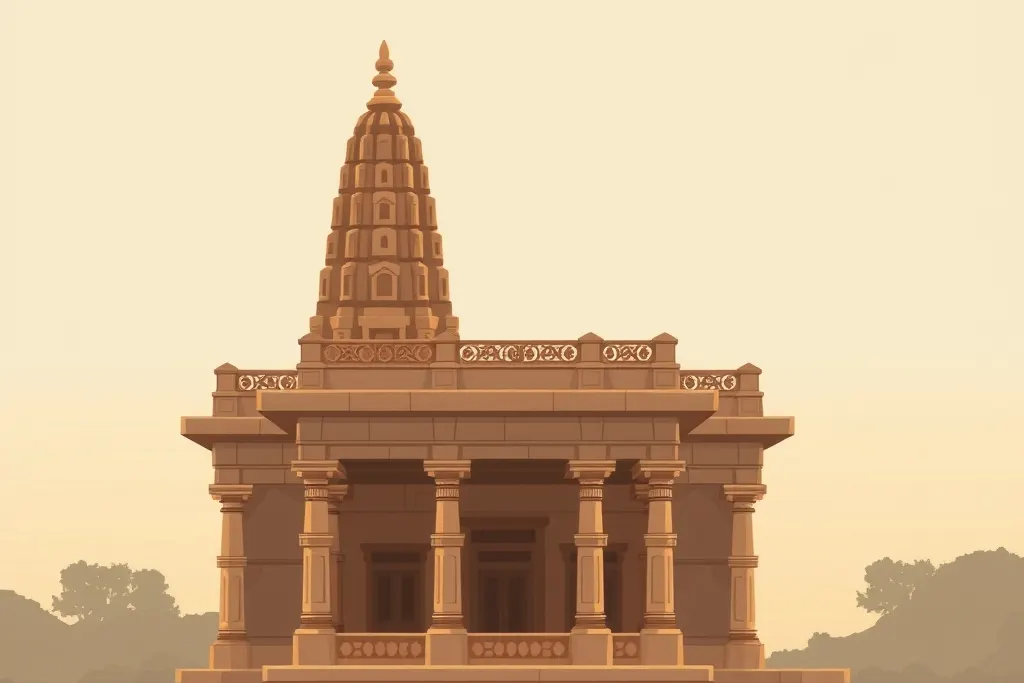
2. Rock-cut and monolithic temples
Rock-cut architecture begins with the Mauryan Barabar caves and reaches Ajanta, Karle and Elephanta; the monolithic temple is carved as a single rock, as the Pallava rathas at Mahabalipuram and the Rashtrakuta Kailasa temple at Ellora, which was cut from the top down.
| Site | Feature |
|---|---|
| Barabar caves | Mauryan rock-cut caves of Ashoka's time, with a polished interior, in Magadha |
| Karle chaitya | A great Buddhist chaitya hall cut in the rock in Maharashtra |
| Ajanta | Buddhist cave monasteries of Maharashtra famed for their wall paintings |
| Ellora Kailasa temple | A monolithic temple cut from the top of the hill downward, Rashtrakuta, eighth century |
| Mahabalipuram rathas | Monolithic temples carved from single rocks under the Pallavas |
| Elephanta | Rock-cut Shaiva caves with the Trimurti image, near Mumbai |
Rock-cut architecture begins with the Mauryan Barabar caves and reaches Ajanta, Karle and Elephanta; the monolithic temple is carved as a single rock, as the Pallava rathas at Mahabalipuram…
3. Constructed temples and public architecture
Structural temples are built up from the ground in stone or brick: the Gupta temple of Deogarh, the Pallava Shore temple, the Chola Brihadisvara at Thanjavur (about 1010), the Chandela temples of Khajuraho and the Konark Sun temple. Public architecture ranges from the Harappan Great Bath and the stupas of Sanchi to stepwells like Rani ki Vav. The treatises on building (Vastu and Shilpa texts such as the Mayamata and the Manasara) give the rules for town, house and temple.
| Monument | Fact |
|---|---|
| Dashavatara temple, Deogarh | A Gupta temple of the sixth century with a tower and carved panels |
| Shore temple, Mahabalipuram | A Pallava structural temple on the sea shore, built under Narasimhavarman II |
| Brihadisvara temple, Thanjavur | The Chola temple completed about 1010 under Rajaraja I, with a great vimana |
| Kandariya Mahadeva temple, Khajuraho | The Chandela nagara temple of the eleventh century |
| Sun temple, Konark | A thirteenth-century Odisha temple in the form of a chariot, under Narasimhadeva I |
| Great Bath, Mohenjodaro | A public Harappan water tank of baked brick |
| Sanchi stupa | A Buddhist stupa with carved gateways (toranas), Mauryan in origin and enlarged by the Shungas and Satavahanas |
| Rani ki Vav, Patan | An eleventh-century stepwell of Gujarat, with sculpted walls |
Structural temples are built up from the ground in stone or brick: the Gupta temple of Deogarh, the Pallava Shore temple, the Chola Brihadisvara at Thanjavur (about 1010), the Chandela…
4. Medieval and colonial architecture
Medieval architecture brought the arch, the dome and the minaret together with Indian craft: forts and palaces (Chittorgarh, Golconda, the Red Fort), mosques (Quwwat-ul-Islam, Jama Masjid) and mausoleums (Humayun's Tomb, the Taj Mahal, Gol Gumbaz). Colonial architecture moved from classical and Gothic Revival (Victoria Terminus) to the Indo-Saracenic (the Gateway of India, Victoria Memorial) and the imperial plan of New Delhi (Lutyens, Rashtrapati Bhavan).
| Monument | Fact |
|---|---|
| Quwwat-ul-Islam mosque, Delhi | The first mosque of Delhi, begun under Qutbuddin Aibak about 1193 |
| Jama Masjid, Delhi | The great mosque built under Shah Jahan, completed in 1656 |
| Humayun's Tomb | A Mughal garden tomb of the sixteenth century in Delhi, the model for the Taj |
| Taj Mahal | The marble mausoleum at Agra, built by Shah Jahan, about 1632 to 1653 |
| Gol Gumbaz, Bijapur | The mausoleum of Muhammad Adil Shah, with one of the largest domes in the world |
| Red Fort, Delhi | The Mughal fort and palace built under Shah Jahan, in red sandstone |
| Chittorgarh fort | A great Rajput hill fort of Rajasthan |
| Golconda fort | The fort of the Qutb Shahi dynasty near Hyderabad |
| Victoria Terminus (CST), Mumbai | A Gothic Revival station designed by F. W. Stevens and completed in 1888 |
| Gateway of India, Mumbai | An arch of 1924 in an Indo-Saracenic style, built for the visit of King George V |
| Victoria Memorial, Kolkata | A marble memorial opened in 1921 to Queen Victoria |
| Rashtrapati Bhavan | The viceroy's house of New Delhi, designed by Edwin Lutyens |
Medieval architecture brought the arch, the dome and the minaret together with Indian craft: forts and palaces (Chittorgarh, Golconda, the Red Fort), mosques (Quwwat-ul-Islam, Jama Masjid)…
5. Three ways of making a temple, and five questions to ask of a monument
Most confusion in this unit comes from mixing the method of making a building with its style. The method has three forms. A rock-cut building is excavated inwards into a cliff, like a cave hall at Karle or Ajanta. A monolithic building is carved out of a single rock into a free-standing form, as the Pallava rathas at Mahabalipuram; the Kailasa temple at Ellora is the great case, carved from the top of the hill downwards. A structural building is raised from the ground, block on block, as at Thanjavur or Konark. Style (nagara, dravida, vesara) is a second, independent question: a structural temple may be in any of the three.
| Question | Example from the chapter |
|---|---|
| What kind is it (temple, tomb, fort, mosque, station)? | Gol Gumbaz is a mausoleum; Golconda is a fort |
| How was it made (rock-cut, monolithic, structural)? | Kailasa is monolithic; the Shore temple is structural |
| Where is it? | Rani ki Vav at Patan in Gujarat; Elephanta near Mumbai |
| Who built it, under which dynasty or ruler? | Brihadisvara: Rajaraja I of the Cholas; Konark: Narasimhadeva I |
| When, to the nearest century? | Khajuraho temples, eleventh century; Victoria Memorial, 1921 |
Medieval and colonial buildings are best sorted by the idea behind them. Medieval buildings combine the arch, dome and minaret with Indian stone-carving: the garden tomb passes from Humayun's Tomb to the Taj Mahal, and the dome grows to the scale of the Gol Gumbaz. Colonial buildings pass through three phases the chapter names: classical and Gothic Revival in the early and middle nineteenth century (Victoria Terminus, 1888), the Indo-Saracenic that borrows Indian forms for imperial buildings (the Gateway of India, the Victoria Memorial), and the planned imperial city of New Delhi.
- Rock-cutExcavated into a cliff: Karle, Ajanta
- MonolithicOne rock, free-standing: rathas, Kailasa
- StructuralRaised block on block: Thanjavur, Konark
- Classical and Gothic RevivalVictoria Terminus, 1888
- Indo-SaracenicGateway of India, Victoria Memorial
- Planned imperial cityNew Delhi
Most confusion in this unit comes from mixing the method of making a building with its style. The method has three forms. A rock-cut building is excavated inwards into a cliff, like a cave…
Key takeaways
- Nagara, dravida, vesara: shikhara, vimana and gopuram mark the first two.
- Barabar, Ajanta, Karle, Elephanta are rock-cut; Kailasa at Ellora and the Mahabalipuram rathas are monolithic.
- Thanjavur (about 1010), Konark (thirteenth century), Khajuraho (eleventh century) are constructed temples.
- Taj Mahal: Shah Jahan; Gol Gumbaz: Bijapur; Victoria Terminus: Gothic Revival; Gateway of India: Indo-Saracenic.
Practice questions (40)
Attempt each one before opening the answer. Every explanation names the tempting wrong option as well as the right one, because that is where marks are lost.
Nagara: which description fits?
Show answer
Answer: A — The northern style with a curved tower (shikhara) over the sanctum, as at Khajuraho and Konark
Nagara: The northern style with a curved tower (shikhara) over the sanctum, as at Khajuraho and Konark. The tempting "The monumental gateway tower of a south Indian temple" goes with Gopuram, and "The mixed style of the Deccan, as in the Hoysala and Chalukya temples" with Vesara.Which fits: The northern style with a curved tower (shikhara) over the sanctum, as at Khajuraho and Konark?
Show answer
Answer: C — Nagara
Nagara: The northern style with a curved tower (shikhara) over the sanctum, as at Khajuraho and Konark. The tempting "Shikhara" is linked with The tower over the sanctum in the Nagara style, and "Vimana" with The tower over the sanctum in the Dravida style.Which fits: The southern style with a pyramidal tower (vimana) and a gateway tower (gopuram), as at Thanjavur?
Show answer
Answer: A — Dravida
Dravida: The southern style with a pyramidal tower (vimana) and a gateway tower (gopuram), as at Thanjavur. The tempting "Gopuram" is linked with The monumental gateway tower of a south Indian temple, and "Nagara" with The northern style with a curved tower (shikhara) over the sanctum, as at Khajuraho and Konark.
Show the other 37 questions
Which fits: The mixed style of the Deccan, as in the Hoysala and Chalukya temples?
Show answer
Answer: D — Vesara
Vesara: The mixed style of the Deccan, as in the Hoysala and Chalukya temples. The tempting "Shikhara" is linked with The tower over the sanctum in the Nagara style, and "Nagara" with The northern style with a curved tower (shikhara) over the sanctum, as at Khajuraho and Konark.Garbhagriha: which description fits?
Show answer
Answer: A — The inner sanctum, a small dark chamber with the image
Garbhagriha: The inner sanctum, a small dark chamber with the image. The tempting "The tower over the sanctum in the Nagara style" goes with Shikhara, and "The tower over the sanctum in the Dravida style" with Vimana.Mandapa: which description fits?
Show answer
Answer: C — The pillared hall before the sanctum
Mandapa: The pillared hall before the sanctum. The tempting "The inner sanctum, a small dark chamber with the image" goes with Garbhagriha, and "The tower over the sanctum in the Dravida style" with Vimana.Shikhara: which description fits?
Show answer
Answer: D — The tower over the sanctum in the Nagara style
Shikhara: The tower over the sanctum in the Nagara style. The tempting "The monumental gateway tower of a south Indian temple" goes with Gopuram, and "The southern style with a pyramidal tower (vimana) and a gateway tower (gopuram), as at Thanjavur" with Dravida.Which fits: The tower over the sanctum in the Nagara style?
Show answer
Answer: D — Shikhara
Shikhara: The tower over the sanctum in the Nagara style. The tempting "Gopuram" is linked with The monumental gateway tower of a south Indian temple, and "Dravida" with The southern style with a pyramidal tower (vimana) and a gateway tower (gopuram), as at Thanjavur.Which fits: The tower over the sanctum in the Dravida style?
Show answer
Answer: D — Vimana
Vimana: The tower over the sanctum in the Dravida style. The tempting "Gopuram" is linked with The monumental gateway tower of a south Indian temple, and "Vesara" with The mixed style of the Deccan, as in the Hoysala and Chalukya temples.Which fits: The monumental gateway tower of a south Indian temple?
Show answer
Answer: D — Gopuram
Gopuram: The monumental gateway tower of a south Indian temple. The tempting "Vimana" is linked with The tower over the sanctum in the Dravida style, and "Nagara" with The northern style with a curved tower (shikhara) over the sanctum, as at Khajuraho and Konark.Which fits: Mauryan rock-cut caves of Ashoka's time, with a polished interior, in Magadha?
Show answer
Answer: D — Barabar caves
Barabar caves: Mauryan rock-cut caves of Ashoka's time, with a polished interior, in Magadha. The tempting "Elephanta" is linked with Rock-cut Shaiva caves with the Trimurti image, near Mumbai, and "Karle chaitya" with A great Buddhist chaitya hall cut in the rock in Maharashtra.Karle chaitya: which description fits?
Show answer
Answer: D — A great Buddhist chaitya hall cut in the rock in Maharashtra
Karle chaitya: A great Buddhist chaitya hall cut in the rock in Maharashtra. The tempting "Buddhist cave monasteries of Maharashtra famed for their wall paintings" goes with Ajanta, and "Rock-cut Shaiva caves with the Trimurti image, near Mumbai" with Elephanta.Ajanta: which description fits?
Show answer
Answer: B — Buddhist cave monasteries of Maharashtra famed for their wall paintings
Ajanta: Buddhist cave monasteries of Maharashtra famed for their wall paintings. The tempting "Monolithic temples carved from single rocks under the Pallavas" goes with Mahabalipuram rathas, and "Mauryan rock-cut caves of Ashoka's time, with a polished interior, in Magadha" with Barabar caves.Ellora Kailasa temple: which description fits?
Show answer
Answer: A — A monolithic temple cut from the top of the hill downward, Rashtrakuta, eighth century
Ellora Kailasa temple: A monolithic temple cut from the top of the hill downward, Rashtrakuta, eighth century. The tempting "Mauryan rock-cut caves of Ashoka's time, with a polished interior, in Magadha" goes with Barabar caves, and "Buddhist cave monasteries of Maharashtra famed for their wall paintings" with Ajanta.Which fits: A monolithic temple cut from the top of the hill downward, Rashtrakuta, eighth century?
Show answer
Answer: B — Ellora Kailasa temple
Ellora Kailasa temple: A monolithic temple cut from the top of the hill downward, Rashtrakuta, eighth century. The tempting "Ajanta" is linked with Buddhist cave monasteries of Maharashtra famed for their wall paintings, and "Elephanta" with Rock-cut Shaiva caves with the Trimurti image, near Mumbai.Which fits: Monolithic temples carved from single rocks under the Pallavas?
Show answer
Answer: D — Mahabalipuram rathas
Mahabalipuram rathas: Monolithic temples carved from single rocks under the Pallavas. The tempting "Barabar caves" is linked with Mauryan rock-cut caves of Ashoka's time, with a polished interior, in Magadha, and "Ajanta" with Buddhist cave monasteries of Maharashtra famed for their wall paintings.Which fits: Rock-cut Shaiva caves with the Trimurti image, near Mumbai?
Show answer
Answer: D — Elephanta
Elephanta: Rock-cut Shaiva caves with the Trimurti image, near Mumbai. The tempting "Karle chaitya" is linked with A great Buddhist chaitya hall cut in the rock in Maharashtra, and "Ellora Kailasa temple" with A monolithic temple cut from the top of the hill downward, Rashtrakuta, eighth century.Dashavatara temple, Deogarh: which description fits?
Show answer
Answer: A — A Gupta temple of the sixth century with a tower and carved panels
Dashavatara temple, Deogarh: A Gupta temple of the sixth century with a tower and carved panels. The tempting "A thirteenth-century Odisha temple in the form of a chariot, under Narasimhadeva I" goes with Sun temple, Konark, and "An eleventh-century stepwell of Gujarat, with sculpted walls" with Rani ki Vav, Patan.Shore temple, Mahabalipuram: which description fits?
Show answer
Answer: B — A Pallava structural temple on the sea shore, built under Narasimhavarman II
Shore temple, Mahabalipuram: A Pallava structural temple on the sea shore, built under Narasimhavarman II. The tempting "A public Harappan water tank of baked brick" goes with Great Bath, Mohenjodaro, and "A Buddhist stupa with carved gateways (toranas), Mauryan in origin and enlarged by the Shungas and Satavahanas" with Sanchi stupa.Brihadisvara temple, Thanjavur: which description fits?
Show answer
Answer: B — The Chola temple completed about 1010 under Rajaraja I, with a great vimana
Brihadisvara temple, Thanjavur: The Chola temple completed about 1010 under Rajaraja I, with a great vimana. The tempting "An eleventh-century stepwell of Gujarat, with sculpted walls" goes with Rani ki Vav, Patan, and "A Gupta temple of the sixth century with a tower and carved panels" with Dashavatara temple, Deogarh.Kandariya Mahadeva temple, Khajuraho: which description fits?
Show answer
Answer: D — The Chandela nagara temple of the eleventh century
Kandariya Mahadeva temple, Khajuraho: The Chandela nagara temple of the eleventh century. The tempting "A thirteenth-century Odisha temple in the form of a chariot, under Narasimhadeva I" goes with Sun temple, Konark, and "A Buddhist stupa with carved gateways (toranas), Mauryan in origin and enlarged by the Shungas and Satavahanas" with Sanchi stupa.Which fits: The Chandela nagara temple of the eleventh century?
Show answer
Answer: A — Kandariya Mahadeva temple, Khajuraho
Kandariya Mahadeva temple, Khajuraho: The Chandela nagara temple of the eleventh century. The tempting "Great Bath, Mohenjodaro" is linked with A public Harappan water tank of baked brick, and "Dashavatara temple, Deogarh" with A Gupta temple of the sixth century with a tower and carved panels.Which fits: A thirteenth-century Odisha temple in the form of a chariot, under Narasimhadeva I?
Show answer
Answer: C — Sun temple, Konark
Sun temple, Konark: A thirteenth-century Odisha temple in the form of a chariot, under Narasimhadeva I. The tempting "Sanchi stupa" is linked with A Buddhist stupa with carved gateways (toranas), Mauryan in origin and enlarged by the Shungas and Satavahanas, and "Shore temple, Mahabalipuram" with A Pallava structural temple on the sea shore, built under Narasimhavarman II.Which fits: A public Harappan water tank of baked brick?
Show answer
Answer: B — Great Bath, Mohenjodaro
Great Bath, Mohenjodaro: A public Harappan water tank of baked brick. The tempting "Rani ki Vav, Patan" is linked with An eleventh-century stepwell of Gujarat, with sculpted walls, and "Shore temple, Mahabalipuram" with A Pallava structural temple on the sea shore, built under Narasimhavarman II.Sanchi stupa: which description fits?
Show answer
Answer: D — A Buddhist stupa with carved gateways (toranas), Mauryan in origin and enlarged by the Shungas and Satavahanas
Sanchi stupa: A Buddhist stupa with carved gateways (toranas), Mauryan in origin and enlarged by the Shungas and Satavahanas. The tempting "The Chola temple completed about 1010 under Rajaraja I, with a great vimana" goes with Brihadisvara temple, Thanjavur, and "A thirteenth-century Odisha temple in the form of a chariot, under Narasimhadeva I" with Sun temple, Konark.Rani ki Vav, Patan: which description fits?
Show answer
Answer: B — An eleventh-century stepwell of Gujarat, with sculpted walls
Rani ki Vav, Patan: An eleventh-century stepwell of Gujarat, with sculpted walls. The tempting "A thirteenth-century Odisha temple in the form of a chariot, under Narasimhadeva I" goes with Sun temple, Konark, and "A Buddhist stupa with carved gateways (toranas), Mauryan in origin and enlarged by the Shungas and Satavahanas" with Sanchi stupa.Quwwat-ul-Islam mosque, Delhi: which description fits?
Show answer
Answer: B — The first mosque of Delhi, begun under Qutbuddin Aibak about 1193
Quwwat-ul-Islam mosque, Delhi: The first mosque of Delhi, begun under Qutbuddin Aibak about 1193. The tempting "The marble mausoleum at Agra, built by Shah Jahan, about 1632 to 1653" goes with Taj Mahal, and "The mausoleum of Muhammad Adil Shah, with one of the largest domes in the world" with Gol Gumbaz, Bijapur.Which fits: The first mosque of Delhi, begun under Qutbuddin Aibak about 1193?
Show answer
Answer: A — Quwwat-ul-Islam mosque, Delhi
Quwwat-ul-Islam mosque, Delhi: The first mosque of Delhi, begun under Qutbuddin Aibak about 1193. The tempting "Golconda fort" is linked with The fort of the Qutb Shahi dynasty near Hyderabad, and "Victoria Terminus (CST), Mumbai" with A Gothic Revival station designed by F. W. Stevens and completed in 1888.Which fits: The great mosque built under Shah Jahan, completed in 1656?
Show answer
Answer: A — Jama Masjid, Delhi
Jama Masjid, Delhi: The great mosque built under Shah Jahan, completed in 1656. The tempting "Chittorgarh fort" is linked with A great Rajput hill fort of Rajasthan, and "Gateway of India, Mumbai" with An arch of 1924 in an Indo-Saracenic style, built for the visit of King George V.Which fits: A Mughal garden tomb of the sixteenth century in Delhi, the model for the Taj?
Show answer
Answer: B — Humayun's Tomb
Humayun's Tomb: A Mughal garden tomb of the sixteenth century in Delhi, the model for the Taj. The tempting "Gol Gumbaz, Bijapur" is linked with The mausoleum of Muhammad Adil Shah, with one of the largest domes in the world, and "Golconda fort" with The fort of the Qutb Shahi dynasty near Hyderabad.Which fits: The marble mausoleum at Agra, built by Shah Jahan, about 1632 to 1653?
Show answer
Answer: A — Taj Mahal
Taj Mahal: The marble mausoleum at Agra, built by Shah Jahan, about 1632 to 1653. The tempting "Gol Gumbaz, Bijapur" is linked with The mausoleum of Muhammad Adil Shah, with one of the largest domes in the world, and "Red Fort, Delhi" with The Mughal fort and palace built under Shah Jahan, in red sandstone.Gol Gumbaz, Bijapur: which description fits?
Show answer
Answer: D — The mausoleum of Muhammad Adil Shah, with one of the largest domes in the world
Gol Gumbaz, Bijapur: The mausoleum of Muhammad Adil Shah, with one of the largest domes in the world. The tempting "The marble mausoleum at Agra, built by Shah Jahan, about 1632 to 1653" goes with Taj Mahal, and "The Mughal fort and palace built under Shah Jahan, in red sandstone" with Red Fort, Delhi.Red Fort, Delhi: which description fits?
Show answer
Answer: C — The Mughal fort and palace built under Shah Jahan, in red sandstone
Red Fort, Delhi: The Mughal fort and palace built under Shah Jahan, in red sandstone. The tempting "The viceroy's house of New Delhi, designed by Edwin Lutyens" goes with Rashtrapati Bhavan, and "A Mughal garden tomb of the sixteenth century in Delhi, the model for the Taj" with Humayun's Tomb.Chittorgarh fort: which description fits?
Show answer
Answer: B — A great Rajput hill fort of Rajasthan
Chittorgarh fort: A great Rajput hill fort of Rajasthan. The tempting "The marble mausoleum at Agra, built by Shah Jahan, about 1632 to 1653" goes with Taj Mahal, and "The mausoleum of Muhammad Adil Shah, with one of the largest domes in the world" with Gol Gumbaz, Bijapur.Which fits: A great Rajput hill fort of Rajasthan?
Show answer
Answer: D — Chittorgarh fort
Chittorgarh fort: A great Rajput hill fort of Rajasthan. The tempting "Gateway of India, Mumbai" is linked with An arch of 1924 in an Indo-Saracenic style, built for the visit of King George V, and "Quwwat-ul-Islam mosque, Delhi" with The first mosque of Delhi, begun under Qutbuddin Aibak about 1193.Which fits: The fort of the Qutb Shahi dynasty near Hyderabad?
Show answer
Answer: A — Golconda fort
Golconda fort: The fort of the Qutb Shahi dynasty near Hyderabad. The tempting "Chittorgarh fort" is linked with A great Rajput hill fort of Rajasthan, and "Victoria Terminus (CST), Mumbai" with A Gothic Revival station designed by F. W. Stevens and completed in 1888.Which fits: A Gothic Revival station designed by F. W. Stevens and completed in 1888?
Show answer
Answer: C — Victoria Terminus (CST), Mumbai
Victoria Terminus (CST), Mumbai: A Gothic Revival station designed by F. W. Stevens and completed in 1888. The tempting "Golconda fort" is linked with The fort of the Qutb Shahi dynasty near Hyderabad, and "Gateway of India, Mumbai" with An arch of 1924 in an Indo-Saracenic style, built for the visit of King George V.Gateway of India, Mumbai: which description fits?
Show answer
Answer: B — An arch of 1924 in an Indo-Saracenic style, built for the visit of King George V
Gateway of India, Mumbai: An arch of 1924 in an Indo-Saracenic style, built for the visit of King George V. The tempting "A great Rajput hill fort of Rajasthan" goes with Chittorgarh fort, and "The fort of the Qutb Shahi dynasty near Hyderabad" with Golconda fort.Victoria Memorial, Kolkata: which description fits?
Show answer
Answer: C — A marble memorial opened in 1921 to Queen Victoria
Victoria Memorial, Kolkata: A marble memorial opened in 1921 to Queen Victoria. The tempting "The great mosque built under Shah Jahan, completed in 1656" goes with Jama Masjid, Delhi, and "The mausoleum of Muhammad Adil Shah, with one of the largest domes in the world" with Gol Gumbaz, Bijapur.Rashtrapati Bhavan: which description fits?
Show answer
Answer: C — The viceroy's house of New Delhi, designed by Edwin Lutyens
Rashtrapati Bhavan: The viceroy's house of New Delhi, designed by Edwin Lutyens. The tempting "The Mughal fort and palace built under Shah Jahan, in red sandstone" goes with Red Fort, Delhi, and "A Gothic Revival station designed by F. W. Stevens and completed in 1888" with Victoria Terminus (CST), Mumbai.