Nutrition, Food Science and Technology: Clinical Nutrition, Public Nutrition, Processing and Food Safety
2. Public Nutrition and Health
Public nutrition deals with the nutrition of whole populations, through programmes rather than single patients. The problems are protein-energy malnutrition (underweight, stunting, wasting), micronutrient deficiencies (iron-deficiency anaemia, vitamin A, iodine) and the rising burden of over-nutrition and obesity. Indian responses are ICDS (Integrated Child Development Services, 1975, delivered through anganwadis: supplementary nutrition, immunisation, health check-ups and pre-school education for children under six, and for pregnant and nursing women), the Mid-Day Meal Scheme (1995, now PM POSHAN) for school children, the National Food Security Act, 2013, iron and folic acid supplementation, vitamin A doses for young children, universal salt iodisation and the Public Distribution System. Tools of assessment are growth monitoring (weight and height against standards), surveys and anthropometry.
| Problem | Cause | Response |
|---|---|---|
| Anaemia | Iron deficiency | Iron and folic acid tablets, iron-rich food |
| Night blindness | Vitamin A deficiency | Vitamin A doses, green leafy vegetables, orange fruits |
| Goitre | Iodine deficiency | Universal iodised salt |
| Stunting, underweight | Protein-energy deficit | ICDS, mid-day meal, PDS |
Public nutrition deals with the nutrition of whole populations, through programmes rather than single patients. The problems are protein-energy malnutrition (underweight, stunting…
3. Food Processing and Technology
Food processing turns raw agricultural produce into safer, longer-lasting or more convenient food. Primary processing cleans, grades and packs or mills the produce (rice milling, flour milling, cleaning and sorting of fruit); secondary processing makes it into a ready-to-cook form (flour into bread, milk into curd, cheese and butter, fruit into jam, oil from seeds); tertiary processing prepares ready-to-eat commercial products (biscuits, noodles, snacks, packaged meals). Methods of preservation include drying, canning, freezing and refrigeration, pasteurisation, salting and sugaring, pickling and irradiation. Fortification adds nutrients lost or lacking (iodine in salt, vitamin A and D in milk and oil, iron in flour and rice). Benefits are less wastage, shelf life, year-round supply, value addition and employment; risks are loss of some nutrients, additives and over-reliance on processed food high in salt, sugar and fat.
- Raw agricultural produce
- Primary: clean, grade, pack or millRice milling, flour milling
- Secondary: ready-to-cook formMilk into curd, fruit into jam
- Tertiary: ready-to-eat productsBiscuits, noodles, packaged meals
Food processing turns raw agricultural produce into safer, longer-lasting or more convenient food. Primary processing cleans, grades and packs or mills the produce (rice milling, flour…
4. Food Quality and Safety
Food quality is the set of characteristics (appearance, taste, nutrition, freshness) that meet consumer needs, and food safety is freedom from hazards that make food harmful: biological (bacteria such as Salmonella, viruses, parasites), chemical (pesticide residues, additives, adulterants, toxins) and physical (glass, stones, hair). In India the Food Safety and Standards Act, 2006 (in force from 2011) consolidated earlier laws and set up the FSSAI, the Food Safety and Standards Authority of India, to lay down standards, license food businesses and monitor safety; it sits with the Ministry of Health and Family Welfare. HACCP (Hazard Analysis and Critical Control Points) is the preventive system that identifies where a hazard can enter at each step of food production, sets control points, monitors them and records results. Quality marks include AGMARK and FPO (see the agriculture chapter), the FSSAI logo and licence number, and the BIS mark.
| Type | Examples | Prevention |
|---|---|---|
| Biological | Salmonella, E. coli, hepatitis A virus, worms | Hygiene, safe water, cooking, cold storage |
| Chemical | Pesticide residues, adulterants, excess additives | Washing, testing, standards, licensing |
| Physical | Glass, stones, metal, hair | Sieving, magnets, covers, protective clothing |
Food quality is the set of characteristics (appearance, taste, nutrition, freshness) that meet consumer needs, and food safety is freedom from hazards that make food harmful: biological…
5. Worked Examples: Drying Yield and Pasteurisation
Food processing questions often involve moisture. Fresh fruit that is 80 per cent water has only 20 per cent solids. If 100 kg of such fruit is dried until it is 20 per cent water, the solids, 20 kg, are unchanged and now make up 80 per cent of the product, so the dried weight is 20 / 0.8 = 25 kg, and 75 kg of water has been removed. Drying therefore reduces weight to a quarter and slows spoilage, since microbes need free water. The same logic explains why dried foods are lighter to transport and last longer without refrigeration.
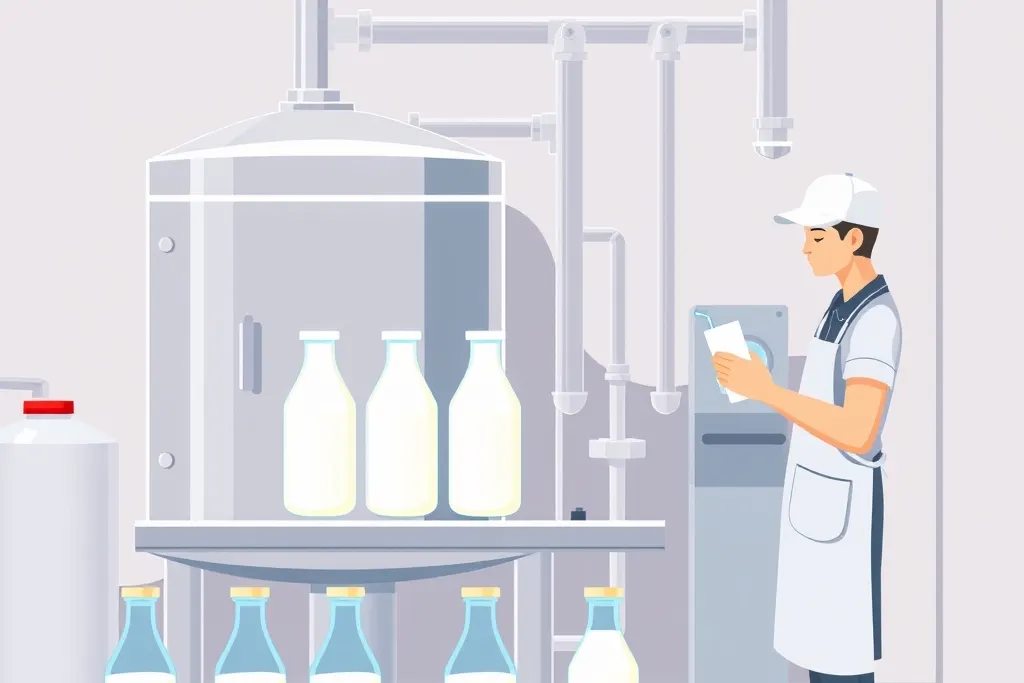
Pasteurisation heats milk enough to destroy disease-causing organisms while keeping its nutrients and taste. In the low-temperature long-time method milk is held at about 63 °C for 30 minutes, and in the high-temperature short-time method at about 72 °C for 15 seconds, after which it is cooled quickly. It is different from sterilisation, which uses higher heat to destroy all microbes and gives a longer shelf life. A question on the difference should say that pasteurisation reduces harmful microbes and needs refrigeration afterwards.
- 100 kg fruit, 80% water
- Solids: 20 kg, unchanged
- Dried to 20% water: solids are 80%
- Dried weight: 20 / 0.8 = 25 kg75 kg of water removed
- About 63 °C
- 30 minutes
- About 72 °C
- 15 seconds
Food processing questions often involve moisture. Fresh fruit that is 80 per cent water has only 20 per cent solids. If 100 kg of such fruit is dried until it is 20 per cent water, the…
Food Adulteration and Its Regulation
Adulteration is the addition of a cheaper or harmful substance to food, or the removal of a valuable one, so that the food becomes unsafe or lower in quality. In India the Food Safety and Standards Act, 2006 consolidated the earlier food laws, and the Food Safety and Standards Authority of India (FSSAI) sets standards, licenses food businesses and monitors safety. Simple home tests, such as passing a magnet over dry tea leaves to find iron filings, show the principle of detecting adulterants.
Adulteration is the addition of a cheaper or harmful substance to food, or the removal of a valuable one, so that the food becomes unsafe or lower in quality. In India the Food Safety and…
Key takeaways
- Therapeutic diets modify consistency, nutrients or frequency; BMI = kg ÷ m²; carbohydrate and protein give 4 kcal per gram and fat 9.
- ICDS (1975), mid-day meal (1995), NFSA (2013), iron-folic acid, vitamin A and iodised salt are the main public nutrition measures.
- Food processing is primary, secondary or tertiary; fortification adds nutrients such as iodine to salt.
- Food hazards are biological, chemical and physical; the Food Safety and Standards Act, 2006 created the FSSAI; HACCP is a preventive control system.
Practice questions (24)
Attempt each one before opening the answer. Every explanation names the tempting wrong option as well as the right one, because that is where marks are lost.
BMI is calculated as:
Show answer
Answer: A — Weight in kg divided by height in metres squared
BMI = kg ÷ m². A 60 kg person of 1.60 m has 60 ÷ 2.56 = 23.4.Fat provides how much energy per gram?
Show answer
Answer: D — 9 kcal
Fat gives 9 kcal per gram, carbohydrate and protein give 4 each, and alcohol 7.The Integrated Child Development Services scheme began in:
Show answer
Answer: C — 1975
ICDS began in 1975 and works through anganwadis. 1995 is the mid-day meal and 2013 the Food Security Act.
Show the other 21 questions
Adding iodine to salt is an example of:
Show answer
Answer: B — Fortification
Fortification adds a nutrient that the diet lacks. Adulteration adds a harmful or cheap substance.Which diet change suits a patient with hypertension?
Show answer
Answer: A — Reduce sodium: less salt, pickles and processed food
Low sodium helps lower blood pressure. High salt and fried food raise the risk.A day's diet has 300 g carbohydrate, 60 g protein and 50 g fat. The energy value is:
Show answer
Answer: D — 1,890 kcal
300 × 4 + 60 × 4 + 50 × 9 = 1,200 + 240 + 450 = 1,890 kcal. Counting fat at 4 kcal per gram would give 1,640 and not 9 gives the common error.Which body regulates food standards and licenses food businesses in India?
Show answer
Answer: C — FSSAI
FSSAI was created under the Food Safety and Standards Act, 2006. The others regulate securities, banking and pollution.Ready-to-eat biscuits and noodles are the product of:
Show answer
Answer: B — Tertiary processing
Tertiary processing makes ready-to-eat commercial products. Primary processing is cleaning and milling.A bakery finds glass fragments in a batch of biscuits. This is a:
Show answer
Answer: A — Physical hazard
Foreign objects such as glass are physical hazards. Bacteria are biological and pesticide residues are chemical.Statement 1: A therapeutic diet can be modified in consistency, nutrients or frequency. Statement 2: HACCP is a method of treating food-borne illness after it occurs. Which is correct?
Show answer
Answer: A — Only statement 1
Statement 1 is correct. Statement 2 is false: HACCP is a preventive system that controls hazards during production.Milling of paddy into rice is an example of:
Show answer
Answer: C — Primary processing
Cleaning, grading and milling raw produce is primary processing. Secondary processing is the tempting wrong option because milling changes the grain, but secondary processing converts produce into a new form such as bread or curd.The Mid-Day Meal Scheme, started in 1995, is now known as:
Show answer
Answer: D — PM POSHAN
The Mid-Day Meal Scheme has been renamed PM POSHAN. Poshan Abhiyaan is the tempting wrong option because the names sound alike, but that is the 2018 mission against stunting and anaemia.HACCP stands for:
Show answer
Answer: A — Hazard Analysis and Critical Control Points
HACCP is the preventive system that finds the critical points where a hazard can enter food production. The other expansions are invented, and the Health and Care one tempts as the abbreviation begins with H.Match the term with its meaning. List I: A. Primary processing B. Secondary processing C. Tertiary processing D. Fortification List II: 1. Making ready-to-eat commercial products such as noodles 2. Cleaning, grading and milling raw produce 3. Adding a nutrient that is lacking, such as iodine to salt 4. Converting produce into a ready-to-cook form such as curd or bread
Show answer
Answer: A — A-2, B-4, C-1, D-3
Primary is 2, secondary 4, tertiary 1 and fortification 3. The pair A-4, B-2 is the tempting swap of the first two levels, but primary processing only cleans and mills, while secondary makes a new ready-to-cook form.Read the statements on therapeutic diets.
(1) A diabetic diet uses low-glycaemic-index foods and plenty of fibre.
(2) A diet for hypertension should be high in sodium.Show answer
Answer: A — 1 only
Statement 1 is true. Statement 2 is false: hypertension needs low sodium, so less salt, pickles and processed food. "Both" tempts for those who mix up potassium, which is encouraged, with sodium.Which dietary advice suits a patient who has a fever?
Show answer
Answer: B — More energy and plenty of fluids
Fever raises metabolism and fluid loss, so more energy and fluids are needed. The "less energy" option tempts because a patient has little appetite, but the body needs more, not less.A dairy heats milk to about 72 °C for 15 seconds and then cools it rapidly. This process is:
Show answer
Answer: C — Pasteurisation (high-temperature short-time)
About 72 °C for 15 seconds is the HTST method of pasteurisation. Sterilisation is the tempting wrong option because both use heat, but sterilisation uses higher heat to destroy all microbes and gives a longer shelf life.Assertion (A): Dried foods keep for long without refrigeration. Reason (R): Microbes need free water to grow.
Show answer
Answer: A — Both A and R are true, and R is the correct explanation of A
Both are true and R explains A. The second option tempts because R is a general fact, but removing the water they need is exactly why drying preserves.An anganwadi worker gives iron and folic acid tablets to adolescent girls and pregnant women. The problem being addressed is:
Show answer
Answer: D — Iron-deficiency anaemia
Iron and folic acid prevent and treat anaemia. Night blindness is the tempting wrong option because vitamin A doses are another programme for young children, but the tablets here are for blood health.A man weighs 90 kg and is 1.80 m tall. On the WHO scale his BMI category is:
Show answer
Answer: A — Overweight
BMI is 90 / 1.8 squared = 90 / 3.24 = 27.8, in the 25 to 29.9 band, which is overweight. Obese is the tempting wrong option for those who see 90 kg and assume that it is very high, but height must be included.160 kg of vegetables containing 75% water are dried until they contain 20% water. The weight of the dried product is:
Show answer
Answer: B — 50 kg
Solids are 25% of 160 = 40 kg and they stay constant, so the dried weight is 40 / 0.8 = 50 kg. Check: 50 kg has 10 kg water, so 110 kg of the original 120 kg of water has gone. The 40 kg option is the tempting error of ignoring that solids are now 80% of the product.A day's diet has 250 g of carbohydrate, 80 g of protein and 60 g of fat. The share of the total energy supplied by fat is nearly:
Show answer
Answer: C — 29%
Energy is 1,000 + 320 + 540 = 1,860 kcal and fat gives 540, so 540 / 1,860 = 29%. Check: (250 + 80) x 4 = 1,320, plus 540 = 1,860. The 15% option is the tempting error of using 4 kcal a gram for fat (240 / 1,560).Consider the statements on food safety regulation.
(1) The Food Safety and Standards Act, 2006 set up the FSSAI.
(2) The FSSAI works under the Ministry of Agriculture.
(3) HACCP is a preventive system that identifies critical points where hazards can enter.Show answer
Answer: C — 1 and 3 only
Statements 1 and 3 are correct. Statement 2 is false: the FSSAI sits with the Ministry of Health and Family Welfare. "1, 2 and 3" tempts those who link food with agriculture.Assertion (A): Pasteurised milk still needs to be kept in a refrigerator. Reason (R): Pasteurisation destroys all the microbes in milk.
Show answer
Answer: C — A is true, but R is false
A is true because some microbes survive and multiply if the milk is warm. R is false: pasteurisation destroys only disease-causing organisms, whereas sterilisation destroys all. The first option is the tempting wrong choice because R looks like it should be the cause, but its claim is the reverse.