Sustainable Agriculture in India: History, Irrigation, the Green Revolution and Food Security
2. Irrigation: Macro and Micro Systems and Traditional Harvesting
Macro irrigation means large works: canals fed from rivers and dams, serving big areas. They deliver much water but lose a lot through seepage and evaporation, and over-irrigation brings waterlogging and salinity. Micro irrigation applies water near the plant: sprinkler, drip (trickle) and dug wells. Drip irrigation delivers water drop by drop to the root zone and saves water (commonly reported savings run to a third to a half or more) and improves yield and fertiliser use, but costs more to install and needs filtered water and maintenance.
| System | Advantage | Disadvantage |
|---|---|---|
| Canal / dam | Large area, cheap per unit of water | Seepage, waterlogging, salinity, displacement |
| Sprinkler | Suits uneven land, saves water | Wind loss, energy for pressure |
| Drip | Largest saving, precise fertiliser use | High cost, clogging |
| Dug well | Local, farmer-controlled | Falling water table, limited yield |
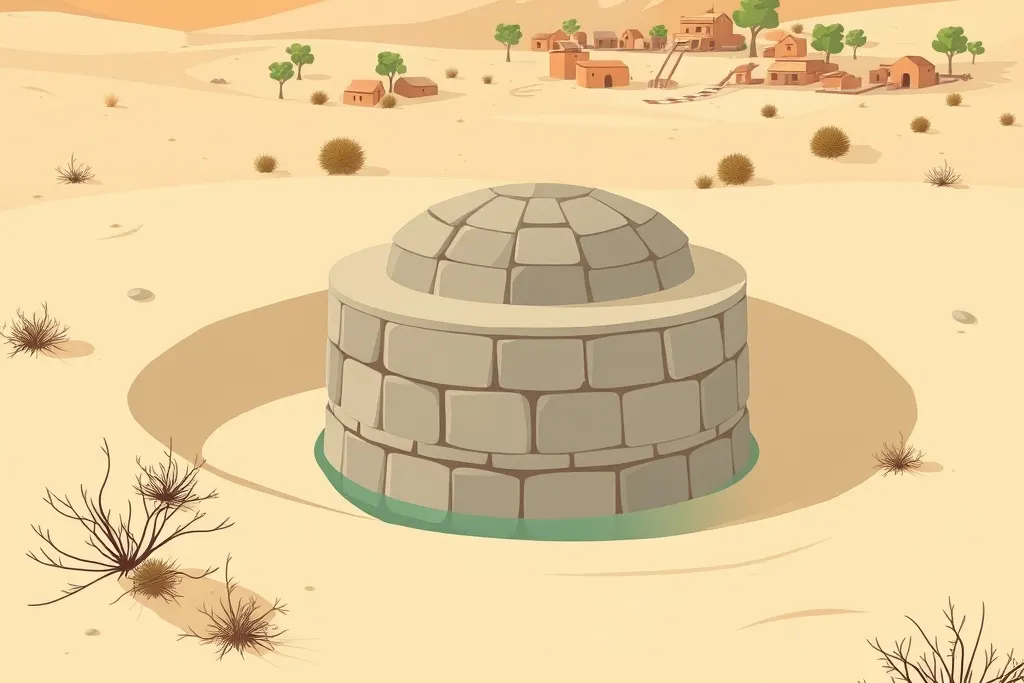
Traditional rainwater harvesting suits each region: tankas (underground tanks fed from a prepared catchment) in the Thar desert of Rajasthan; khadins (earthen bund across a slope to hold run-off for a crop, Jaisalmer); johads (earthen check dams, Rajasthan); ahar-pynes (a catchment basin with channels, South Bihar); zings (small tanks filled by glacier melt through channels, Ladakh); and eris (tanks, Tamil Nadu). They are cheap, built from local material, owned and managed by communities, and recharge groundwater.
- Rajasthan
- Tankas: underground tanks, Thar
- Khadins: bund across a slope
- Johads: earthen check dams
- South Bihar
- Ahar-pynes: basin with channels
- Ladakh
- Zings: tanks fed by glacier melt
- Tamil Nadu
- Eris: tanks
Macro irrigation means large works: canals fed from rivers and dams, serving big areas. They deliver much water but lose a lot through seepage and evaporation, and over-irrigation brings…
3. The Green Revolution: Gains and Costs
The Green Revolution (from the mid-1960s) rested on high-yielding varieties (HYV) of wheat and rice (dwarf, fertiliser-responsive), chemical fertilisers, pesticides and assured irrigation. Output of foodgrains rose sharply and India ended dependence on food aid. But it also meant mono-cropping, loss of agro-biodiversity, declining soil health (nutrient imbalance, salinity), contamination and pesticide harm to ecosystems, high energy use, and rising input costs that favoured larger farmers over small and medium ones, with the gains concentrated in Punjab, Haryana and western Uttar Pradesh. At household and community level it improved food security where it reached, yet left debt where yields or prices failed.
Elements of sustainable agriculture: mixed farming (crops with livestock), mixed cropping and inter-cropping (growing two crops together, such as a cereal with a legume), crop rotation (breaking pest cycles and restoring nitrogen with legumes), organic manures, bio-fertilisers (Rhizobium, Azotobacter, blue-green algae and Azolla), green manure (for example sunhemp and dhaincha), biopesticides (neem, Bt) and Integrated Pest Management (IPM), which combines biological, cultural and mechanical controls and uses chemicals last and in minimum amounts. The syllabus contrasts traditional, natural, organic and modern farming and the gene revolution of genetically modified seeds.
- Foodgrain output rose sharply
- Ended dependence on food aid
- Better food security where it reached
- Mono-cropping, loss of agro-biodiversity
- Declining soil health; pesticide harm
- Rising input costs favoured larger farmers
The Green Revolution (from the mid-1960s) rested on high-yielding varieties (HYV) of wheat and rice (dwarf, fertiliser-responsive), chemical fertilisers, pesticides and assured irrigation.…
4. After the Harvest: Storage, Preservation, Quality Marks and Food Security
Management of produce covers storage (dry, cool, pest-free; losses to rodents, insects and moisture are large), grading, packaging and transport. Preservation methods: low temperature (refrigeration slows microbes), high temperature (boiling, pasteurisation), drying, canning (heat in a sealed container), and preservation by salt (pickles) and sugar (jams, squashes) through osmosis. Food adulteration is adding a cheaper or harmful substance or removing a valuable one (for example, chalk powder in flour, metanil yellow in turmeric, water in milk); additives include preservatives, colours and flavours, harmful when banned or excessive. Quality marks: ISI (Indian Standards Institution, now BIS, for industrial and consumer goods), AGMARK (Agricultural Marketing: grading of farm produce, such as ghee, honey, spices and pulses) and FPO (Fruit Products Order, 1955, for processed fruit and vegetable products).
| Mark | Applies to | Body |
|---|---|---|
| ISI | Industrial and consumer goods | BIS (formerly ISI) |
| AGMARK | Graded agricultural commodities | Directorate of Marketing and Inspection |
| FPO | Processed fruit and vegetable products | Fruit Products Order |
Food security means that all people at all times have physical, social and economic access to enough safe and nutritious food. It involves availability (production), storage and access. A sustainable approach for developing countries combines environmental sustainability with land reform, credit support and market support to farmers, a better marketing system that does not trap farmers with middlemen, improving access through the public distribution system, and farmers' ownership of seeds. The National Food Security Act, 2013 makes access to subsidised foodgrain a legal entitlement for up to 75% of the rural and 50% of the urban population, with special provisions for women and children.
Management of produce covers storage (dry, cool, pest-free; losses to rodents, insects and moisture are large), grading, packaging and transport. Preservation methods: low temperature…
5. Worked Reasoning: Water Depth and the Choice of System
Irrigation water is measured as a depth over an area. One hectare-centimetre is 1 cm of water over 1 hectare = 10,000 m² × 0.01 m = 100 m³. A 2-hectare field given a 5 cm irrigation therefore receives 2 × 5 = 10 hectare-cm = 1,000 m³ (10 lakh litres). If a drip system were to supply the same crop with 40% less water (a saving of the order commonly claimed, used here as an illustration and not as a measured value), the same field would need 600 m³, leaving 400 m³ for another field in the dry season. The reasoning to practise is the choice: for sandy soil, scarce water and a high-value row crop, drip; for large flat canal-served wheat, flooding is cheap but wasteful and risks waterlogging; for undulating land, sprinklers.
Irrigation water is measured as a depth over an area. One hectare-centimetre is 1 cm of water over 1 hectare = 10,000 m² × 0.01 m = 100 m³. A 2-hectare field given a 5 cm irrigation…
A Unit Trap in Irrigation Questions
The hectare-centimetre is a depth-times-area unit, equal to 100 cubic metres. A farmer who applies 5 cm of water to a 2-hectare field uses 10 hectare-centimetres, which is 1,000 m³, or 10 lakh litres.
The hectare-centimetre is a depth-times-area unit, equal to 100 cubic metres. A farmer who applies 5 cm of water to a 2-hectare field uses 10 hectare-centimetres, which is 1,000 m³, or 10…
Key takeaways
- Pre-colonial farming was for sustenance with diversity and multi-cropping; colonial policy pushed cash crops and punitive taxes; the Bengal famine of 1943 is the stock example.
- Macro irrigation (canals, dams) covers large areas but causes waterlogging and salinity; micro irrigation (drip, sprinkler) saves water.
- Traditional harvesting: tankas and khadins (Rajasthan), johads, ahar-pynes (Bihar), zings (Ladakh), eris (Tamil Nadu).
- The Green Revolution raised foodgrain output through HYV, fertiliser and irrigation but cost soil health, diversity and equity.
- Quality marks: ISI (BIS), AGMARK (farm produce), FPO (processed fruit); the NFSA 2013 gives a legal right to subsidised grain.
Practice questions (24)
Attempt each one before opening the answer. Every explanation names the tempting wrong option as well as the right one, because that is where marks are lost.
AGMARK is a quality mark for:
Show answer
Answer: B — Graded agricultural produce
AGMARK grades agricultural commodities such as ghee, honey and pulses. ISI covers industrial and consumer goods and FPO covers processed fruit products.The Bengal famine occurred in:
Show answer
Answer: A — 1943
The great Bengal famine was in 1943, during the Second World War. 1770 was an earlier Bengal famine and 1966 a Bihar drought.Tankas, built to store rainwater, are typical of:
Show answer
Answer: D — The Thar desert of Rajasthan
Tankas are underground tanks of the Thar. Ladakh has zings, South Bihar has ahar-pynes and Tamil Nadu has eris.
Show the other 21 questions
Which of these is a bio-fertiliser?
Show answer
Answer: C — Rhizobium
Rhizobium fixes nitrogen in legume roots. Urea and superphosphate are chemical fertilisers and DDT is a pesticide.Which irrigation method gives the largest water saving but costs most to install?
Show answer
Answer: B — Drip
Drip delivers water to the root zone drop by drop, with the greatest saving, but needs pipes, emitters and filters. Canals and flooding are the heavy users of water.The National Food Security Act, 2013 covers up to what share of the rural population?
Show answer
Answer: A — 75%
The Act covers up to 75% of the rural and 50% of the urban population. Remembering 50% as the rural figure swaps the two.A major negative effect of the Green Revolution described in the syllabus is:
Show answer
Answer: D — Loss of agro-biodiversity through mono-cropping
HYV mono-cropping displaced many local varieties. Production rose, fertiliser use rose and farmers moved away from traditional seeds, so the other options are the reverse.Jams and pickles keep because the sugar or salt:
Show answer
Answer: C — Draws water out of microbes by osmosis
High concentrations of sugar or salt dehydrate microbes osmotically. Heat is the principle of canning, not of salting or sugaring.A farmer grows maize and cowpea in the same field at the same time, and next year plants wheat there. These two practices are, in order:
Show answer
Answer: B — Inter-cropping, then crop rotation
Two crops together in one season is inter-cropping, and a different crop in the same field in a following season is rotation. Mixed farming means crops with livestock.Statement 1: Colonial policy encouraged commercial crops for export. Statement 2: Pre-colonial farming was oriented mainly to the market rather than to sustenance. Which is correct?
Show answer
Answer: A — Only statement 1
Statement 1 is correct. Statement 2 is false because pre-colonial farming was largely for sustenance, with diverse seed and multi-cropping.The scientist most closely associated with leading the Green Revolution in India is:
Show answer
Answer: D — M.S. Swaminathan
M.S. Swaminathan led the Green Revolution in India. Norman Borlaug is the tempting wrong option because he developed the high-yielding wheat varieties and is called the father of the Green Revolution worldwide, but the Indian effort is credited to Swaminathan; Kurien led the White Revolution.In India, the Green Revolution of the 1960s began mainly with high-yielding varieties of:
Show answer
Answer: A — Wheat
The Green Revolution started with high-yielding wheat, and rice followed. Pulses are the tempting wrong option because they are an important food crop, but they saw little benefit and their output lagged behind that of wheat and rice.Which of the following is an organic manure made with the help of earthworms?
Show answer
Answer: B — Vermicompost
Vermicompost is made when earthworms digest organic waste into nutrient-rich castings. Urea is the tempting wrong option because it is the most widely used fertiliser, but it is a manufactured chemical nitrogen fertiliser and not an organic manure.Match the traditional water-harvesting system with its region. A. Johad B. Kuls C. Zabo D. Eri — 1. Rajasthan 2. Himachal Pradesh 3. Nagaland 4. Tamil Nadu
Show answer
Answer: A — A-1, B-2, C-3, D-4
Johads are in Rajasthan (1), kuls in Himachal Pradesh (2), zabo in Nagaland (3) and eri tanks in Tamil Nadu (4). The tempting wrong pair swaps zabo and eri, though one belongs to the north-eastern hills and the other to the southern plains.Integrated Pest Management (IPM) is best described as:
Show answer
Answer: A — A combination of biological, cultural and limited chemical control methods
IPM combines several methods, such as natural enemies, crop rotation and, when needed, limited pesticide use. Fixed-schedule spraying is the tempting wrong option because it is common farm practice, but it is the opposite of IPM, which acts only when pest numbers cross a damaging level.Including legumes in a crop rotation helps mainly because they:
Show answer
Answer: C — Add nitrogen to the soil through root-nodule bacteria
Legumes host nitrogen-fixing bacteria in root nodules, so the soil gains nitrogen for the next crop. Removing all nutrients is the tempting wrong option because crops do take up nutrients, but legumes in rotation are valued precisely for restoring nitrogen, not depleting it.The Public Distribution System in India mainly:
Show answer
Answer: D — Distributes subsidised foodgrains through fair price shops
The PDS supplies subsidised foodgrains to households through fair price shops. Fixing the minimum price paid to farmers is the tempting wrong option because it is also part of food policy, but that is the minimum support price, while grading and marking is done under AGMARK.Assertion (A): Monoculture makes a farming system more vulnerable to pest outbreaks. Reason (R): Genetically uniform crops across large areas allow a pest or disease to spread rapidly.
Show answer
Answer: A — Both A and R are true, and R is the correct explanation of A
Both are true and R explains A: uniform crops lack resistant variants, so a single pest can spread across the whole area. The tempting option that R is not the explanation overlooks that this spread is exactly the vulnerability that A describes.Consider the statements about the Green Revolution.
(1) It relied on high-yielding seeds, irrigation and fertilisers.
(2) Its gains were concentrated in regions such as Punjab, Haryana and western Uttar Pradesh.
(3) It reduced regional disparities in agriculture.
(4) It led to overuse of groundwater and agrochemicals in some areas.Show answer
Answer: A — (1), (2) and (4) only
Statements 1, 2 and 4 are correct. Statement 3 is false: gains were concentrated in well-irrigated regions, so the Green Revolution widened regional disparities rather than narrowing them.Flood irrigation of a 2-hectare field uses 7,500 m³ of water per hectare in a season. Drip irrigation uses 60% of the flood-irrigation amount. How much water does drip save on the field?
Show answer
Answer: A — 6,000 m³
Flood use is 2 × 7,500 = 15,000 m³ and drip use is 0.6 × 15,000 = 9,000 m³, so the saving is 6,000 m³; check: 40% of 15,000 = 6,000. The tempting wrong option is 9,000, which is the water drip irrigation uses, not the amount saved.A farmer applies 5 cm depth of irrigation water to a 2-hectare field. The volume of water applied is:
Show answer
Answer: B — 1,000 m³
Volume = depth × area = 0.05 m × 20,000 m² = 1,000 m³; check: 5 cm over one hectare is 500 m³, so over two hectares it is 1,000 m³. The tempting wrong option is 500 m³, which is the answer for one hectare, and 100 m³ comes from mishandling the centimetre-to-metre conversion.Under the National Food Security Act, 2013, a priority household with four members is entitled to how many kilograms of foodgrains per month?
Show answer
Answer: C — 20 kg
Priority households receive 5 kg per person per month, so four members get 4 × 5 = 20 kg; check: 20 ÷ 4 = 5. The tempting wrong option is 35 kg, which is the fixed quantity per household for the poorest Antyodaya Anna Yojana households, not for priority households.Neem-coated urea is used in Indian agriculture mainly because it:
Show answer
Answer: D — Releases nitrogen more slowly, improving efficiency and reducing diversion to industry
The neem coating slows the conversion of urea to nitrate, so less nitrogen is lost and plants use it better, and it makes diversion to industrial use harder. Adding phosphorus is the tempting wrong option because fertilisers are often grouped by nutrient, but urea supplies nitrogen, not phosphorus.Growing two crops together in a definite row pattern, such as soybean and maize in alternate rows, is called:
Show answer
Answer: A — Intercropping
Intercropping grows two or more crops at the same time in a definite row pattern. Mixed cropping is the tempting wrong option because it also grows crops together, but there the seeds are mixed and sown with no definite row arrangement; crop rotation is growing different crops in successive seasons.