English Literature for Classes 6-8: Devices, Forms, Stories and Writers
Forms of Poetry
A stanza is a group of lines (a verse-paragraph). A couplet is two lines, a tercet three, a quatrain four. The rhyme scheme is written in letters: ABAB means lines one and three rhyme, and lines two and four. Metre is the pattern of stressed and unstressed syllables, and one unit is a foot; an iamb is an unstressed syllable followed by a stressed one, and iambic pentameter is a line of five iambs (ten syllables). Blank verse is unrhymed iambic pentameter — the verse of Shakespeare's plays and Milton's Paradise Lost. Free verse has neither regular rhyme nor regular metre.
| Form | What it is |
|---|---|
| Sonnet | 14 lines in iambic pentameter. Shakespearean: three quatrains and a couplet, ABAB CDCD EFEF GG. Petrarchan: an octave (8 lines) and a sestet (6 lines) |
| Ballad | a narrative poem in simple quatrains, from oral tradition |
| Ode | a long lyric addressed to a person, object or idea in praise |
| Elegy | a lament for the dead |
| Lyric | a short poem of personal feeling, songlike |
| Epic | a long narrative of heroic deeds in elevated style |
| Haiku | a Japanese form: three lines of 5, 7 and 5 syllables, about a moment in nature |
| Limerick | a humorous five-line poem rhyming AABBA |
| Nonsense verse | verse of invented words and playful logic, as in Lewis Carroll's "Jabberwocky" |
- Tells a story
- Simple quatrains
- Addresses and praises
- Long, elevated
- Mourns the dead
- Grave, reflective
- Personal feeling
- Short, songlike
A stanza is a group of lines (a verse-paragraph). A couplet is two lines, a tercet three, a quatrain four. The rhyme scheme is written in letters: ABAB means lines one and three rhyme, and…
Short Stories, Prose Forms and Drama
A short story builds one effect through a small number of characters and one main conflict. Its parts follow a plot that rises and falls: the exposition (setting, characters), the rising action (the conflict grows), the climax (the turning point of highest tension), the falling action and the resolution. Other terms the paper asks: the protagonist (the central character) and the antagonist (the opposing force), the setting, the theme (the idea the story is about), the point of view (first person "I" or third person "he/she"), the tone (the writer's attitude) and the mood (the feeling the reader gets).
- Exposition
- Rising action
- Climax
- Falling action
- Resolution
- Fable: a short tale, usually with animals, that ends in a moral (Aesop). Parable: a short story, with people, that teaches a lesson. Allegory: a story in which characters and events stand for ideas — Orwell's Animal Farm is the standard example.
- Biography is the life of another written by someone else; autobiography is the writer's own life; an essay is a short prose piece on one subject; a novel is a long fiction with many characters and a large plot.
In drama, a play is divided into acts, which are divided into scenes. The text is dialogue plus stage directions. A soliloquy is a character alone on stage speaking thoughts aloud; an aside is a brief remark to the audience that the other characters do not hear; a monologue is a long speech to others. Dramatic irony is when the audience knows what a character does not. A tragedy ends in the downfall of a great character; a comedy ends happily, usually in reconciliation or marriage. Shakespeare's tragedies include Hamlet, Macbeth, Othello, King Lear and Romeo and Juliet; his comedies include A Midsummer Night's Dream, Twelfth Night and As You Like It.
A short story builds one effect through a small number of characters and one main conflict. Its parts follow a plot that rises and falls: the exposition (setting, characters), the rising…
Well-Known Writers and Their Works
Matching a work to its writer is the commonest literature question. The English literary periods give a frame: Chaucer (the medieval father of English poetry, The Canterbury Tales), the Elizabethan age (Shakespeare, Marlowe), the 17th-century epic of Milton, the Romantic poets (Wordsworth, Coleridge, Byron, Shelley, Keats), the Victorian age (Tennyson, Dickens) and the modern writers. Wordsworth and Coleridge together published Lyrical Ballads, which opened the Romantic movement.
| Poem | Poet |
|---|---|
| Daffodils; The Solitary Reaper | William Wordsworth |
| The Rime of the Ancient Mariner; Kubla Khan | S. T. Coleridge |
| Ode to the West Wind; Ozymandias | P. B. Shelley |
| To Autumn; Ode to a Nightingale | John Keats |
| The Tyger; The Lamb | William Blake |
| Ulysses; The Charge of the Light Brigade | Alfred Tennyson |
| The Road Not Taken; Stopping by Woods on a Snowy Evening | Robert Frost |
| If | Rudyard Kipling |
| Casabianca | Felicia Hemans |
| Where the Mind is Without Fear (from Gitanjali) | Rabindranath Tagore |
| Work | Writer |
|---|---|
| The Gift of the Magi; The Last Leaf | O. Henry |
| The Necklace | Guy de Maupassant |
| The Happy Prince; The Selfish Giant | Oscar Wilde |
| Oliver Twist; A Christmas Carol | Charles Dickens |
| Pride and Prejudice | Jane Austen |
| Robinson Crusoe | Daniel Defoe |
| Gulliver's Travels | Jonathan Swift |
| Treasure Island | R. L. Stevenson |
| Alice's Adventures in Wonderland | Lewis Carroll |
| Animal Farm | George Orwell |
| Malgudi Days; Swami and Friends | R. K. Narayan |
| Untouchable; Coolie | Mulk Raj Anand |
| Hamlet; Macbeth; Twelfth Night | William Shakespeare |
Matching a work to its writer is the commonest literature question. The English literary periods give a frame: Chaucer (the medieval father of English poetry, The Canterbury Tales), the…
Talking About a Poem: Theme, Tone, Mood
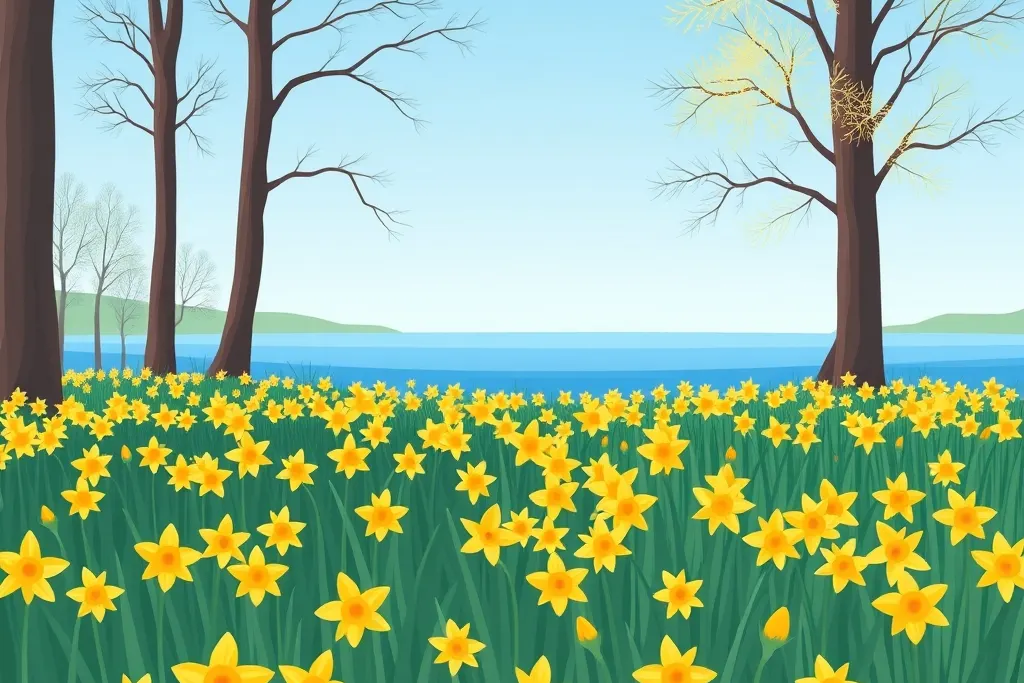
Three words are routinely run together and the paper separates them. The theme is the idea the poem is about (in "Daffodils", the lasting joy that a remembered scene gives). The tone is the poet's attitude to the subject (admiring, mocking, regretful). The mood is the reader's feeling on reading (calm, uneasy). A summary says what happens in the poem; a statement of theme says what it means. When asked for the central idea, do not retell the lines — name the idea in one sentence.
Three words are routinely run together and the paper separates them. The theme is the idea the poem is about (in "Daffodils", the lasting joy that a remembered scene gives). The tone is the…
Key takeaways
- Simile uses "like" or "as"; metaphor says one thing is another; personification gives a thing human action. Alliteration repeats opening sounds, assonance vowel sounds, onomatopoeia imitates a sound; hyperbole exaggerates, an oxymoron joins opposites, irony says or shows the opposite.
- A sonnet has 14 lines (Shakespearean ABAB CDCD EFEF GG; Petrarchan octave plus sestet); a haiku 5-7-5; a limerick AABBA; an ode praises, an elegy mourns, a ballad tells a story, a lyric voices personal feeling. Blank verse is unrhymed iambic pentameter.
- A plot runs exposition, rising action, climax, falling action, resolution. A soliloquy is a character alone thinking aloud; an aside is a remark to the audience; a monologue is a long speech to others. Tragedy ends in downfall, comedy in reconciliation.
- Match works to writers: Daffodils - Wordsworth; The Tyger - Blake; Ode to the West Wind - Shelley; To Autumn - Keats; The Road Not Taken - Frost; If - Kipling; Gitanjali - Tagore; The Gift of the Magi - O. Henry; The Selfish Giant - Wilde; Animal Farm - Orwell; Malgudi Days - Narayan.
- Theme is the idea, tone is the poet's attitude, mood is the reader's feeling. A summary retells; a statement of theme says what the poem means.
Practice questions (24)
Attempt each one before opening the answer. Every explanation names the tempting wrong option as well as the right one, because that is where marks are lost.
"I wandered lonely as a cloud" contains a:
Show answer
Answer: B — Simile
The word "as" signals a comparison: a simile."All the world's a stage" is a:
Show answer
Answer: B — Metaphor
The world is said to be a stage, with no "like" or "as": a metaphor."The wind whispered through the trees" is an example of:
Show answer
Answer: A — Personification
The wind is given a human action, whispering.
Show the other 21 questions
The word "hiss" is an example of:
Show answer
Answer: B — Onomatopoeia
Hiss is onomatopoeia because the word itself imitates the sound it names; alliteration, the tempting option, needs a repeated opening consonant sound."Deafening silence" is a:
Show answer
Answer: B — Oxymoron
Two opposite ideas, loud and silent, are joined."Sally sells seashells" shows:
Show answer
Answer: A — Alliteration
Alliteration is a repeated opening consonant sound, and the s in Sally, sells and seashells repeats; it is not a simile because there is no like or as comparison."O Wind, if Winter comes, can Spring be far behind?" contains the device called:
Show answer
Answer: A — Apostrophe
The poet speaks directly to the wind, which cannot answer: apostrophe.A poem of 14 lines in iambic pentameter is a:
Show answer
Answer: B — Sonnet
A sonnet is a 14-line poem in iambic pentameter; a haiku is much shorter and a limerick is a short comic verse, so neither fits 14 lines.The Shakespearean sonnet ends in:
Show answer
Answer: A — A rhyming couplet
Three quatrains are followed by a rhyming couplet (GG).A haiku has lines of:
Show answer
Answer: B — 5, 7, 5 syllables
A haiku has three lines of 5, 7 and 5 syllables.A poem that mourns a death is a(n):
Show answer
Answer: B — Elegy
An elegy is a poem of lament for the dead, so a poem mourning a death is an elegy; an ode praises its subject, which is the tempting wrong choice.Blank verse is:
Show answer
Answer: B — Unrhymed iambic pentameter
It has a regular metre but no rhyme, and is the verse of Shakespeare's plays.The turning point of highest tension in a story is the:
Show answer
Answer: B — Climax
The climax comes after the rising action.A story in which characters and events stand for ideas, such as Animal Farm, is an:
Show answer
Answer: A — Allegory
An allegory is a story whose characters and events stand for ideas, as in Animal Farm; an autobiography tells the writer own life and an elegy is a poem of mourning.A character alone on stage speaking thoughts aloud delivers a:
Show answer
Answer: A — Soliloquy
A soliloquy is thinking aloud when alone, as in Hamlet's "To be, or not to be".Which is a Shakespearean comedy?
Show answer
Answer: C — Twelfth Night
Twelfth Night is a comedy; the others are tragedies."The Tyger" was written by:
Show answer
Answer: A — William Blake
Blake wrote it, in Songs of Experience."The Road Not Taken" is by:
Show answer
Answer: A — Robert Frost
Robert Frost wrote it, and "Stopping by Woods on a Snowy Evening".The Gift of the Magi is a short story by:
Show answer
Answer: B — O. Henry
O. Henry wrote it, and also "The Last Leaf". "The Selfish Giant" is Wilde's; "The Necklace" is Maupassant's.Which pair is correct?
Show answer
Answer: A — Gitanjali - Tagore
Animal Farm is Orwell's, Gulliver's Travels Swift's, Treasure Island Stevenson's.Wordsworth and Coleridge together published:
Show answer
Answer: B — Lyrical Ballads
Lyrical Ballads opened the Romantic movement in English poetry.Assertion (A): "The classroom was a zoo" is a metaphor. Reason (R): It states one thing to be another without "like" or "as".
Show answer
Answer: A — A and R are true, and R explains A
Without "like" or "as", the direct "was" makes it a metaphor.Which of these are devices of sound? (Select all that apply)
Show answer
Answer: A — Alliteration; B — Assonance; C — Onomatopoeia
A metaphor works by comparison, not sound.Which of these are Shakespearean tragedies? (Select all that apply)
Show answer
Answer: A — Hamlet; B — Macbeth; D — King Lear
Hamlet, Macbeth and King Lear are tragedies, so they are correct; Twelfth Night is a comedy, which is the trap since it is also a famous Shakespeare play.