Television and Radio: Production Stages, Programme Formats, Radio Writing and Recording
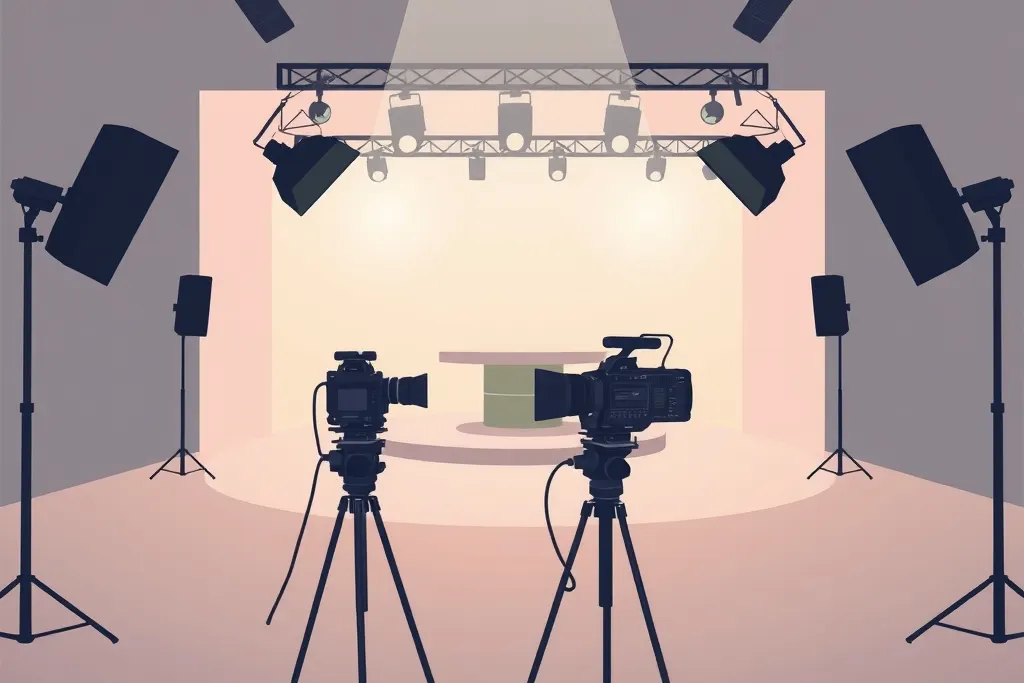
2. Programme Formats and Audiences
A format is the repeatable structure of a programme. The main television formats are news and current affairs (bulletins, debates), the talk show (a host and guests), the serial or soap (continuing fiction, aimed at a regular audience, usually daytime and evening), reality shows (unscripted, with real participants and voting), the game or quiz show, the documentary (factual, non-fiction storytelling), children's programmes, sports and educational programmes. The audience is measured and segmented: by age, gender, region and income; the broadcaster sells its audience to advertisers, which is why ratings matter. In India audience measurement is done by BARC (Broadcast Audience Research Council, set up in 2010), which reports ratings from set-top and panel data (the older measure was TRP, television rating points). Prime time (the evening) draws the largest audience and the highest advertising rates.
| Format | What it is | Typical audience |
|---|---|---|
| News bulletin | Scheduled reports of the day | General |
| Talk show | Host and guests discuss topics | Adults, opinion seekers |
| Soap or serial | Continuing fictional story | Family, especially women |
| Documentary | Factual, non-fiction film | Niche, informed viewers |
A format is the repeatable structure of a programme. The main television formats are news and current affairs (bulletins, debates), the talk show (a host and guests), the serial or soap…
3. Radio: Writing and Recording
Radio is a medium for the ear alone, and that governs the script. A good radio script uses conversational language (written to be spoken, as one would talk to a friend), the active voice, simple, short sentences that can be understood at one hearing, and avoids technical jargon; it uses vivid, sound-based imagery so the listener can see a picture in the mind ("theatre of the mind"), repeats key points because a listener cannot re-read, writes numbers and names so they can be said easily, and marks pauses and sound effects. It is typed in double spacing, with sound cues in a separate column.
The radio studio is acoustically treated (soundproofed, with absorbing walls) so only the intended sound is recorded. Equipment: the microphone converts sound to an electrical signal (dynamic microphones are rugged and good for speech and live use; condenser microphones are more sensitive, for studio vocals and music; lavalier or lapel microphones clip to clothing); the amplifier boosts the weak signal; the mixer (sound mixer or console) combines and balances several sources (voices, music, effects) and controls levels; speakers and headphones monitor the sound; and recording is made on digital recorders or computers, with editing software. Transmission sends the finished signal from the studio by link to the transmitter and antenna, in AM (amplitude modulation, long range, more noise) or FM (frequency modulation, better quality, shorter range).
| Equipment | Job | Note |
|---|---|---|
| Dynamic microphone | Sound to signal; rugged | Speech, outdoor use |
| Condenser microphone | Sound to signal; sensitive | Studio vocals, music |
| Amplifier | Boosts the signal | Needed before the speakers |
| Mixer | Combines and balances sources | Controls levels |
Radio is a medium for the ear alone, and that governs the script. A good radio script uses conversational language (written to be spoken, as one would talk to a friend), the active voice…
4. Worked Examples
Example 1. Turn a print sentence into radio copy. Print: "The Minister, who arrived at 10 a.m., inaugurated the facility, which was constructed at a cost of ₹4.5 crore, after the ceremony was presided over by the Chief Secretary." Radio: "The Minister opened the new centre this morning. It cost four and a half crore rupees. The Chief Secretary presided." Short sentences, active voice, numbers written as they are spoken, one idea in each. Example 2. A talk show is recorded with two guests and a host; three microphones go to a mixer, whose output is monitored on speakers, and the stereo output goes to the recorder. If one guest is much quieter, the engineer raises that microphone's level on the mixer; the amplifier is not the tool that balances sources. Example 3. A serial that loses viewers in the evening ratings will be rescheduled or changed, because ratings decide advertising rates.
Example 1. Turn a print sentence into radio copy. Print: "The Minister, who arrived at 10 a.m., inaugurated the facility, which was constructed at a cost of ₹4.5 crore, after the ceremony…
5. Shot Sizes and Script Timing
Television scripts are written in shots. An extreme long shot shows the setting, a long shot shows the whole subject in its surroundings, a medium shot shows a person from the waist up, a close-up shows the face, and an extreme close-up shows a detail such as the eyes. Camera movements include the pan (turning left or right on a fixed point), the tilt (up or down), the zoom (changing the lens) and the dolly (moving the camera itself). For timing, a radio or television presenter speaks at about 150 words a minute, so a 30-second spot holds about 75 words and a 60-second script about 150 words; a script longer than that must be cut or spoken too fast.
| Term | Meaning | Use |
|---|---|---|
| Long shot | Whole subject and surroundings | Set the scene |
| Medium shot | Person from the waist up | Dialogue, interviews |
| Close-up | Face or object | Emotion, detail |
| 30-second spot | 150 words/min × 0.5 | About 75 words |
Television scripts are written in shots. An extreme long shot shows the setting, a long shot shows the whole subject in its surroundings, a medium shot shows a person from the waist up, a…
Worked Reasoning: Choosing the Format
A producer chooses a programme format by asking who the audience is and what the message needs. A short news bulletin suits a mass audience that wants the day's facts. A documentary suits a viewer who will sit through a longer, researched treatment. A talk show or interview suits a message that depends on a personality or on debate, and a quiz or game show suits an audience that wants participation. For radio, which has no pictures, the script must use sound, voice and music to carry the whole meaning.
A producer chooses a programme format by asking who the audience is and what the message needs. A short news bulletin suits a mass audience that wants the day's facts. A documentary suits a…
Key takeaways
- TV production has three stages: pre-production (idea, script, storyboard, budget), production (shooting) and post-production (editing, mix, titles).
- Formats include news, talk show, serial, reality, quiz and documentary; BARC measures audiences in India.
- A radio script uses conversational language, active voice, simple sentences, no jargon and vivid imagery.
- The microphone turns sound into signal, the amplifier boosts it, the mixer combines and balances sources and speakers monitor.
- FM gives better quality over shorter range; AM carries further with more noise.
Practice questions (24)
Attempt each one before opening the answer. Every explanation names the tempting wrong option as well as the right one, because that is where marks are lost.
Planning, scripting and budgeting before shooting belong to:
Show answer
Answer: B — Pre-production
Everything before the camera rolls is pre-production. Shooting is production and editing is post-production.A radio script should use:
Show answer
Answer: A — Conversational language and simple sentences
Radio is heard once, so language must be conversational, active and simple.Which equipment combines and balances several sound sources?
Show answer
Answer: D — Mixer
The mixer balances sources. The amplifier only boosts the signal and the speaker reproduces sound.
Show the other 21 questions
In India audience ratings for television are reported by:
Show answer
Answer: C — BARC
BARC, the Broadcast Audience Research Council, set up in 2010, reports ratings.Which microphone is more sensitive and is preferred for studio vocals and music?
Show answer
Answer: B — Condenser
Condenser microphones are sensitive; dynamic ones are rugged and suit speech and live use.The drawn, shot-by-shot plan of a television sequence is the:
Show answer
Answer: A — Storyboard
A storyboard sketches each shot in order before shooting.A shot showing a face filling the frame is a:
Show answer
Answer: D — Close-up
The close-up shows a face or detail. Pan and dolly are camera movements, not shot sizes.Which transmission mode offers better sound quality but a shorter range?
Show answer
Answer: A — FM
FM is of higher quality and shorter range; AM travels further with more noise.A talk show has one guest much quieter than the others. The engineer should:
Show answer
Answer: C — Raise that microphone's level on the mixer
Balancing sources is the mixer's job. Speakers and the transmitter come after the mix, and the script does not change loudness.Statement 1: A documentary is a factual, non-fiction format. Statement 2: Non-linear editing means editing tape to tape. Which is correct?
Show answer
Answer: A — Only statement 1
Statement 1 is correct. Tape-to-tape is linear editing; non-linear editing is done on a computer with random access to clips.In television camera work, a 'tilt' is the movement of the camera:
Show answer
Answer: B — Vertically, up or down
A tilt swings the camera head up or down on its fixed mount. Horizontally is the tempting wrong option, which is a pan.The colour television system used in India is:
Show answer
Answer: C — PAL
India follows the PAL system at 25 frames per second. NTSC is the tempting wrong option, which is used in the USA and Japan at about 30 frames per second.'Dead air' in radio broadcasting means:
Show answer
Answer: D — Unintended silence on air
Dead air is an unplanned gap with no sound. A musical interlude is the tempting wrong option, which fills time deliberately and is not a fault.In video editing, a 'dissolve' is a transition in which:
Show answer
Answer: A — One shot gradually blends into the next
Two images overlap for a moment as one fades out and the other fades in. Cuts instantly is the tempting wrong option, which is the simple cut.Foley in sound production refers to:
Show answer
Answer: B — Recreating everyday sound effects such as footsteps in post-production
Foley artists perform sounds in sync with the picture. Mixing music tracks only is the tempting wrong option, which is a part of mixing and not the creation of effects.The 'rule of thirds' in framing a shot suggests that the subject be placed:
Show answer
Answer: C — Along or near the lines dividing the frame into thirds
Off-centre placement on the thirds lines gives a balanced, interesting composition. Exactly at the centre is the tempting wrong option, which feels natural but is usually static.The FM radio band used in India lies roughly between:
Show answer
Answer: D — 88 and 108 MHz
FM broadcasting occupies about 88–108 MHz. 530–1,600 kHz is the tempting wrong option, which is the medium-wave AM band.About camera movements, consider:
(1) A pan is a horizontal movement of the camera head.
(2) A tilt is a vertical movement of the camera head.
(3) A zoom is done by physically moving the camera closer.Show answer
Answer: A — 1 and 2 only
Statements 1 and 2 are correct; a zoom changes the lens focal length, while moving the camera closer is a dolly, so 3 is wrong. Option 4 is the tempting wrong option.Assertion (A): The 180-degree rule is followed in filming a conversation. Reason (R): Crossing the imaginary axis can confuse viewers about where the characters are placed.
Show answer
Answer: A — Both A and R are true, and R is the correct explanation of A
Both are true and R explains A: keeping cameras on one side preserves screen direction. Option 2 is the tempting wrong option, though R is the reason for the rule.Match the studio role with its work.
A. Director – 1. Creative control of the production;
B. Floor manager – 2. Coordinates activity on the studio floor;
C. Sound recordist – 3. Captures audio;
D. Editor – 4. Assembles shots into the final programme.Show answer
Answer: B — A-1, B-2, C-3, D-4
The second option is correct for all four. Option 1 is the tempting wrong option, which swaps director and floor manager.A two-minute PAL video clip runs at 25 frames per second. The total number of frames is:
Show answer
Answer: C — 3,000
2 min = 120 s, and 120 × 25 = 3,000 frames. 2,880 is the tempting wrong option, which uses 24 frames per second, the film rate.A 16:9 high-definition frame is 1,920 pixels wide. Its height is:
Show answer
Answer: D — 1,080 pixels
Height = 1,920 × 9 ÷ 16 = 1,080. 1,440 is the tempting wrong option, which belongs to a 4:3 frame of the same width.A radio station transmits at 100 MHz. Taking the speed of radio waves as 3 × 10⁸ m/s, the wavelength is:
Show answer
Answer: A — 3 m
Wavelength = speed ÷ frequency = 3 × 10⁸ ÷ 10⁸ = 3 m. 0.3 m is the tempting wrong option, from mis-handling the MHz prefix.In a live broadcast with six cameras, the person who selects which camera's picture goes on air is the:
Show answer
Answer: B — Vision mixer
The vision mixer (or technical director) cuts between feeds on the director's call. Floor manager is the tempting wrong option, who relays instructions to performers but does not switch pictures.