Other Technologies: A Survey (Unit 8)
2. Water management
India managed water by storing it. The Harappans built reservoirs at Dholavira and the Great Bath at Mohenjodaro; the Cholas the Kallanai dam; the builders of ancient Sringaverapura its flood-water tank near Prayagraj; later builders the stepwells; and the regions have their own methods: the ahar-pyne of the Ganga plain, the kuhl of Himachal, the zabo of Nagaland and the eri tanks of Tamil Nadu.
| Structure or system | Fact |
|---|---|
| Dholavira reservoirs | Rock-cut reservoirs and channels of a Harappan city in Kutch |
| Great Bath | The Mohenjodaro tank with waterproofing of bitumen |
| Kallanai (Grand Anicut) | A stone dam on the Kaveri built by the Chola king Karikala, in the second century |
| Sringaverapura tank | An ancient tank near Prayagraj that stored the Ganga flood water |
| Stepwell (vav, baoli) | A well reached by steps, as at Patan and Delhi |
| Ahar-pyne | The channels and embankments of the plain south of the Ganga that carry hill water to the fields |
| Kuhl | The hill-stream channels of Himachal Pradesh |
| Zabo | The water-harvesting and farming system of Nagaland |
| Tank irrigation | The village tanks (eri) of Tamil Nadu that stored the monsoon rain |
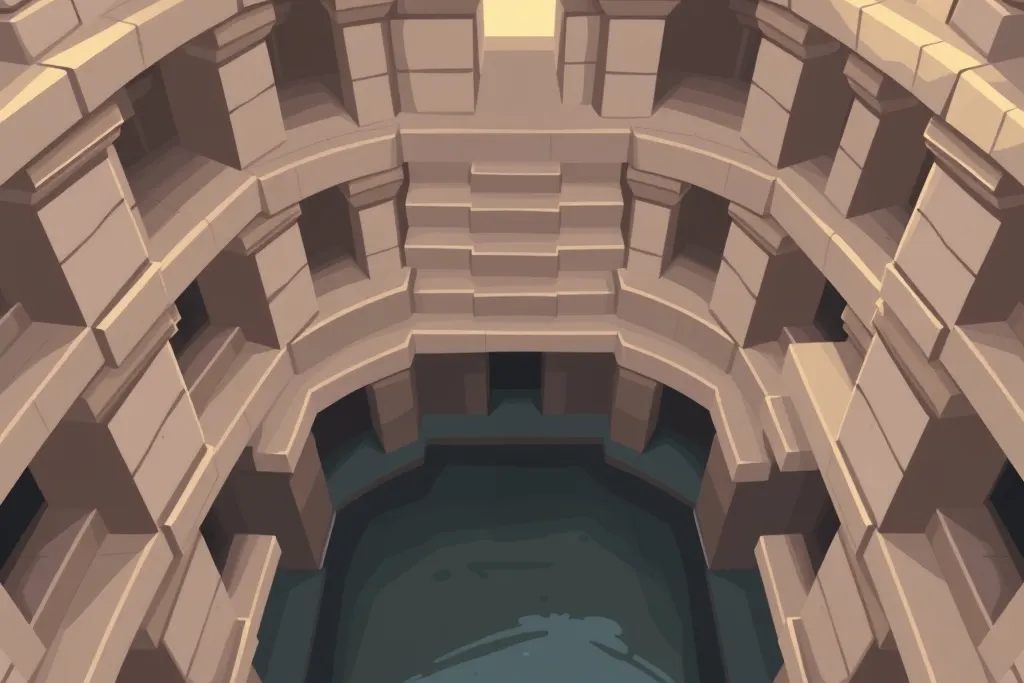
India managed water by storing it. The Harappans built reservoirs at Dholavira and the Great Bath at Mohenjodaro; the Cholas the Kallanai dam; the builders of ancient Sringaverapura its…
3. Textiles, writing, pyrotechnics, cosmetics and gems
Cotton was spun and woven from the Harappan age, and Indian cloth (muslin, ikat) and dyes (indigo) reached the world. Writing used Brahmi (left to right) and Kharoshthi (right to left), on birch bark, palm leaf, copper and later paper. The Arthashastra gives a recipe for an incendiary powder; the Brihat Samhita has the Gandhayukti, a chapter on perfumes; and the gem-treatises test pearls, rubies and diamonds.
| Topic | Fact |
|---|---|
| Harappan cotton | The earliest evidence of cotton spinning and weaving in the world, at Mehrgarh and Harappa |
| Muslin of Dhaka | A very fine cotton cloth of Bengal, famed in the Mughal age |
| Indigo | The blue dye that India supplied to the world |
| Ikat | A resist-dyed weave of Odisha, Andhra and Gujarat, tied before dyeing |
| Brahmi script | The script of the Ashokan edicts, written from left to right |
| Kharoshthi script | The script of the north-west, written from right to left |
| Birch bark and palm leaf | The writing materials of the north and the south before paper |
| Copper plates | The durable record of land grants |
| Gandhayukti | The art of perfumery, described in the Brihat Samhita |
| Agni-churna | The incendiary powder of the Arthashastra, an early pyrotechnic mixture |
| Ratnapariksha | The testing of gems, treated in the Arthashastra and in texts such as the Agastimata |
| Navaratna | The nine gems of Indian tradition: pearl, ruby, topaz, emerald, diamond and others |
- Left to right
- Right to left
Cotton was spun and woven from the Harappan age, and Indian cloth (muslin, ikat) and dyes (indigo) reached the world. Writing used Brahmi (left to right) and Kharoshthi (right to left), on…
4. How the survey is tested
Expect pairings of a technology or structure with its place, period or maker, and of a text with its subject. Keep the regional water systems and the two scripts apart, and remember which Harappan craft belongs to which material.
Expect pairings of a technology or structure with its place, period or maker, and of a text with its subject. Keep the regional water systems and the two scripts apart, and remember which…
5. Reading a technology: material, method, place
Every item in this unit can be pinned down by three words: the material it is made of, the method that shaped it, and the place or period where it is best known. The dancing girl of Mohenjodaro is bronze (material), lost-wax cast (method), Harappan (period). The Delhi iron pillar is forged iron, of about the fifth century, and has resisted rust for about fifteen centuries. Wootz is a high-carbon steel made in crucibles in south India. Once you can say these three words for an item, most options that attach it to the wrong material or the wrong place can be thrown out at once.
| Item | Material and method | Where and when |
|---|---|---|
| Dancing girl | Bronze, lost-wax casting | Mohenjodaro, Harappan |
| Seals | Steatite, carved with animals and script | Harappan trade |
| Weights | Chert, cubes in a regular series | Harappan |
| Bricks | Baked clay in the ratio 1 : 2 : 4 | Harappan houses and drains |
| Beads | Carnelian and agate, drilled | Chanhudaro, Lothal |
| Wootz steel | High-carbon steel from the crucible | South India |
| Iron pillar | Forged iron | Delhi, about the fifth century |
| Zinc | Distilled in the medieval age | Zawar, Rajasthan |
Water management should be learned in the same way, by the problem solved. Where the problem is a river that floods, the answer is a dam or a flood tank (the Kallanai on the Kaveri, the tank of Sringaverapura near Prayagraj). Where it is dry country with scarce rain, it is a store: the reservoirs of Dholavira, the stepwells, the eri tanks of Tamil Nadu. Where it is a hill with a stream, it is a channel: the kuhl of Himachal Pradesh. Where water must be carried across a plain, it is the ahar-pyne channels and embankments south of the Ganga. The zabo of Nagaland joins water-harvesting with farming.
- A river that floods: dam or flood tankKallanai; Sringaverapura tank
- Dry country: a storeDholavira reservoirs, stepwells, eri tanks
- A hill with a stream: a channelKuhl of Himachal Pradesh
- Across a plain: channels and embankmentsAhar-pyne, south of the Ganga
- Harvesting joined with farmingZabo of Nagaland
Every item in this unit can be pinned down by three words: the material it is made of, the method that shaped it, and the place or period where it is best known. The dancing girl of…
6. Worked examples and traps
Question: "Which script was written from right to left?" Brahmi, the script of the Ashokan edicts, runs left to right; Kharoshthi, the script of the north-west, runs right to left. Answer…
Key takeaways
- Harappan crafts: lost-wax bronze, steatite seals, chert weights, standard bricks, carnelian beads.
- Kallanai (Chola, Kaveri), Dholavira reservoirs, ahar-pyne (south of the Ganga), kuhl (Himachal), zabo (Nagaland).
- Brahmi runs left to right, Kharoshthi right to left.
- The Delhi iron pillar and wootz steel show Indian metallurgy.
Practice questions (40)
Attempt each one before opening the answer. Every explanation names the tempting wrong option as well as the right one, because that is where marks are lost.
Lost-wax casting: which description fits?
Show answer
Answer: B — Bronze casting from a wax model, as in the Mohenjodaro dancing girl
Lost-wax casting: Bronze casting from a wax model, as in the Mohenjodaro dancing girl. The tempting "Standard bricks in the ratio of 1 : 2 : 4 used for houses and drains" goes with Burnt brick, and "Carnelian and agate beads drilled with fine drills, at Chanhudaro and Lothal" with Bead-making.Which fits: Bronze casting from a wax model, as in the Mohenjodaro dancing girl?
Show answer
Answer: D — Lost-wax casting
Lost-wax casting: Bronze casting from a wax model, as in the Mohenjodaro dancing girl. The tempting "Wootz steel" is linked with The high-carbon crucible steel of south India, famed abroad as Damascus steel, and "Burnt brick" with Standard bricks in the ratio of 1 : 2 : 4 used for houses and drains.Which fits: Square seals of steatite carved with animals and a script, used in trade?
Show answer
Answer: B — Seals
Seals: Square seals of steatite carved with animals and a script, used in trade. The tempting "Lothal dockyard" is linked with A brick basin of Gujarat taken to be a Harappan dock, and "Painted Grey Ware" with The fine grey pottery of the Gangetic plain, about 1200 to 600 BCE.
Show the other 37 questions
Weights: which description fits?
Show answer
Answer: B — Cubical weights of chert in a binary and decimal series
Weights: Cubical weights of chert in a binary and decimal series. The tempting "Bronze casting from a wax model, as in the Mohenjodaro dancing girl" goes with Lost-wax casting, and "Carnelian and agate beads drilled with fine drills, at Chanhudaro and Lothal" with Bead-making.Burnt brick: which description fits?
Show answer
Answer: B — Standard bricks in the ratio of 1 : 2 : 4 used for houses and drains
Burnt brick: Standard bricks in the ratio of 1 : 2 : 4 used for houses and drains. The tempting "Square seals of steatite carved with animals and a script, used in trade" goes with Seals, and "Carnelian and agate beads drilled with fine drills, at Chanhudaro and Lothal" with Bead-making.Bead-making: which description fits?
Show answer
Answer: A — Carnelian and agate beads drilled with fine drills, at Chanhudaro and Lothal
Bead-making: Carnelian and agate beads drilled with fine drills, at Chanhudaro and Lothal. The tempting "Square seals of steatite carved with animals and a script, used in trade" goes with Seals, and "Standard bricks in the ratio of 1 : 2 : 4 used for houses and drains" with Burnt brick.Which fits: Carnelian and agate beads drilled with fine drills, at Chanhudaro and Lothal?
Show answer
Answer: B — Bead-making
Bead-making: Carnelian and agate beads drilled with fine drills, at Chanhudaro and Lothal. The tempting "Weights" is linked with Cubical weights of chert in a binary and decimal series, and "Burnt brick" with Standard bricks in the ratio of 1 : 2 : 4 used for houses and drains.Which fits: A brick basin of Gujarat taken to be a Harappan dock?
Show answer
Answer: D — Lothal dockyard
Lothal dockyard: A brick basin of Gujarat taken to be a Harappan dock. The tempting "Bead-making" is linked with Carnelian and agate beads drilled with fine drills, at Chanhudaro and Lothal, and "Painted Grey Ware" with The fine grey pottery of the Gangetic plain, about 1200 to 600 BCE.Painted Grey Ware: which description fits?
Show answer
Answer: B — The fine grey pottery of the Gangetic plain, about 1200 to 600 BCE
Painted Grey Ware: The fine grey pottery of the Gangetic plain, about 1200 to 600 BCE. The tempting "Bronze casting from a wax model, as in the Mohenjodaro dancing girl" goes with Lost-wax casting, and "Cubical weights of chert in a binary and decimal series" with Weights.Northern Black Polished Ware: which description fits?
Show answer
Answer: D — The lustrous black pottery of the age of the Mahajanapadas
Northern Black Polished Ware: The lustrous black pottery of the age of the Mahajanapadas. The tempting "A rust-resistant forged iron pillar of the Gupta age, about the fifth century" goes with Iron Pillar, Delhi, and "The medieval distillation of zinc in Rajasthan" with Zinc distillation, Zawar.Wootz steel: which description fits?
Show answer
Answer: B — The high-carbon crucible steel of south India, famed abroad as Damascus steel
Wootz steel: The high-carbon crucible steel of south India, famed abroad as Damascus steel. The tempting "A rust-resistant forged iron pillar of the Gupta age, about the fifth century" goes with Iron Pillar, Delhi, and "The medieval distillation of zinc in Rajasthan" with Zinc distillation, Zawar.Which fits: The high-carbon crucible steel of south India, famed abroad as Damascus steel?
Show answer
Answer: A — Wootz steel
Wootz steel: The high-carbon crucible steel of south India, famed abroad as Damascus steel. The tempting "Burnt brick" is linked with Standard bricks in the ratio of 1 : 2 : 4 used for houses and drains, and "Bead-making" with Carnelian and agate beads drilled with fine drills, at Chanhudaro and Lothal.Which fits: A rust-resistant forged iron pillar of the Gupta age, about the fifth century?
Show answer
Answer: D — Iron Pillar, Delhi
Iron Pillar, Delhi: A rust-resistant forged iron pillar of the Gupta age, about the fifth century. The tempting "Seals" is linked with Square seals of steatite carved with animals and a script, used in trade, and "Weights" with Cubical weights of chert in a binary and decimal series.Zinc distillation, Zawar: which description fits?
Show answer
Answer: A — The medieval distillation of zinc in Rajasthan
Zinc distillation, Zawar: The medieval distillation of zinc in Rajasthan. The tempting "Square seals of steatite carved with animals and a script, used in trade" goes with Seals, and "Standard bricks in the ratio of 1 : 2 : 4 used for houses and drains" with Burnt brick.Dholavira reservoirs: which description fits?
Show answer
Answer: C — Rock-cut reservoirs and channels of a Harappan city in Kutch
Dholavira reservoirs: Rock-cut reservoirs and channels of a Harappan city in Kutch. The tempting "A stone dam on the Kaveri built by the Chola king Karikala, in the second century" goes with Kallanai (Grand Anicut), and "A well reached by steps, as at Patan and Delhi" with Stepwell (vav, baoli).Great Bath: which description fits?
Show answer
Answer: B — The Mohenjodaro tank with waterproofing of bitumen
Great Bath: The Mohenjodaro tank with waterproofing of bitumen. The tempting "The water-harvesting and farming system of Nagaland" goes with Zabo, and "The village tanks (eri) of Tamil Nadu that stored the monsoon rain" with Tank irrigation.Which fits: The Mohenjodaro tank with waterproofing of bitumen?
Show answer
Answer: A — Great Bath
Great Bath: The Mohenjodaro tank with waterproofing of bitumen. The tempting "Stepwell (vav, baoli)" is linked with A well reached by steps, as at Patan and Delhi, and "Zabo" with The water-harvesting and farming system of Nagaland.Which fits: A stone dam on the Kaveri built by the Chola king Karikala, in the second century?
Show answer
Answer: B — Kallanai (Grand Anicut)
Kallanai (Grand Anicut): A stone dam on the Kaveri built by the Chola king Karikala, in the second century. The tempting "Ahar-pyne" is linked with The channels and embankments of the plain south of the Ganga that carry hill water to the fields, and "Tank irrigation" with The village tanks (eri) of Tamil Nadu that stored the monsoon rain.Sringaverapura tank: which description fits?
Show answer
Answer: C — An ancient tank near Prayagraj that stored the Ganga flood water
Sringaverapura tank: An ancient tank near Prayagraj that stored the Ganga flood water. The tempting "The water-harvesting and farming system of Nagaland" goes with Zabo, and "The Mohenjodaro tank with waterproofing of bitumen" with Great Bath.Stepwell (vav, baoli): which description fits?
Show answer
Answer: C — A well reached by steps, as at Patan and Delhi
Stepwell (vav, baoli): A well reached by steps, as at Patan and Delhi. The tempting "The hill-stream channels of Himachal Pradesh" goes with Kuhl, and "The water-harvesting and farming system of Nagaland" with Zabo.Ahar-pyne: which description fits?
Show answer
Answer: B — The channels and embankments of the plain south of the Ganga that carry hill water to the fields
Ahar-pyne: The channels and embankments of the plain south of the Ganga that carry hill water to the fields. The tempting "The village tanks (eri) of Tamil Nadu that stored the monsoon rain" goes with Tank irrigation, and "The Mohenjodaro tank with waterproofing of bitumen" with Great Bath.Which fits: The channels and embankments of the plain south of the Ganga that carry hill water to the fields?
Show answer
Answer: A — Ahar-pyne
Ahar-pyne: The channels and embankments of the plain south of the Ganga that carry hill water to the fields. The tempting "Great Bath" is linked with The Mohenjodaro tank with waterproofing of bitumen, and "Sringaverapura tank" with An ancient tank near Prayagraj that stored the Ganga flood water.Which fits: The hill-stream channels of Himachal Pradesh?
Show answer
Answer: B — Kuhl
Kuhl: The hill-stream channels of Himachal Pradesh. The tempting "Sringaverapura tank" is linked with An ancient tank near Prayagraj that stored the Ganga flood water, and "Stepwell (vav, baoli)" with A well reached by steps, as at Patan and Delhi.Zabo: which description fits?
Show answer
Answer: B — The water-harvesting and farming system of Nagaland
Zabo: The water-harvesting and farming system of Nagaland. The tempting "An ancient tank near Prayagraj that stored the Ganga flood water" goes with Sringaverapura tank, and "A well reached by steps, as at Patan and Delhi" with Stepwell (vav, baoli).Tank irrigation: which description fits?
Show answer
Answer: D — The village tanks (eri) of Tamil Nadu that stored the monsoon rain
Tank irrigation: The village tanks (eri) of Tamil Nadu that stored the monsoon rain. The tempting "The Mohenjodaro tank with waterproofing of bitumen" goes with Great Bath, and "A well reached by steps, as at Patan and Delhi" with Stepwell (vav, baoli).Harappan cotton: which description fits?
Show answer
Answer: C — The earliest evidence of cotton spinning and weaving in the world, at Mehrgarh and Harappa
Harappan cotton: The earliest evidence of cotton spinning and weaving in the world, at Mehrgarh and Harappa. The tempting "The script of the north-west, written from right to left" goes with Kharoshthi script, and "The art of perfumery, described in the Brihat Samhita" with Gandhayukti.Which fits: The earliest evidence of cotton spinning and weaving in the world, at Mehrgarh and Harappa?
Show answer
Answer: A — Harappan cotton
Harappan cotton: The earliest evidence of cotton spinning and weaving in the world, at Mehrgarh and Harappa. The tempting "Brahmi script" is linked with The script of the Ashokan edicts, written from left to right, and "Copper plates" with The durable record of land grants.Which fits: A very fine cotton cloth of Bengal, famed in the Mughal age?
Show answer
Answer: C — Muslin of Dhaka
Muslin of Dhaka: A very fine cotton cloth of Bengal, famed in the Mughal age. The tempting "Ratnapariksha" is linked with The testing of gems, treated in the Arthashastra and in texts such as the Agastimata, and "Navaratna" with The nine gems of Indian tradition: pearl, ruby, topaz, emerald, diamond and others.Indigo: which description fits?
Show answer
Answer: B — The blue dye that India supplied to the world
Indigo: The blue dye that India supplied to the world. The tempting "A resist-dyed weave of Odisha, Andhra and Gujarat, tied before dyeing" goes with Ikat, and "The writing materials of the north and the south before paper" with Birch bark and palm leaf.Ikat: which description fits?
Show answer
Answer: D — A resist-dyed weave of Odisha, Andhra and Gujarat, tied before dyeing
Ikat: A resist-dyed weave of Odisha, Andhra and Gujarat, tied before dyeing. The tempting "The script of the north-west, written from right to left" goes with Kharoshthi script, and "The durable record of land grants" with Copper plates.Brahmi script: which description fits?
Show answer
Answer: D — The script of the Ashokan edicts, written from left to right
Brahmi script: The script of the Ashokan edicts, written from left to right. The tempting "The art of perfumery, described in the Brihat Samhita" goes with Gandhayukti, and "The nine gems of Indian tradition: pearl, ruby, topaz, emerald, diamond and others" with Navaratna.Which fits: The script of the Ashokan edicts, written from left to right?
Show answer
Answer: D — Brahmi script
Brahmi script: The script of the Ashokan edicts, written from left to right. The tempting "Copper plates" is linked with The durable record of land grants, and "Gandhayukti" with The art of perfumery, described in the Brihat Samhita.Which fits: The script of the north-west, written from right to left?
Show answer
Answer: D — Kharoshthi script
Kharoshthi script: The script of the north-west, written from right to left. The tempting "Agni-churna" is linked with The incendiary powder of the Arthashastra, an early pyrotechnic mixture, and "Navaratna" with The nine gems of Indian tradition: pearl, ruby, topaz, emerald, diamond and others.Birch bark and palm leaf: which description fits?
Show answer
Answer: D — The writing materials of the north and the south before paper
Birch bark and palm leaf: The writing materials of the north and the south before paper. The tempting "The testing of gems, treated in the Arthashastra and in texts such as the Agastimata" goes with Ratnapariksha, and "The earliest evidence of cotton spinning and weaving in the world, at Mehrgarh and Harappa" with Harappan cotton.Copper plates: which description fits?
Show answer
Answer: D — The durable record of land grants
Copper plates: The durable record of land grants. The tempting "The script of the north-west, written from right to left" goes with Kharoshthi script, and "The incendiary powder of the Arthashastra, an early pyrotechnic mixture" with Agni-churna.Gandhayukti: which description fits?
Show answer
Answer: C — The art of perfumery, described in the Brihat Samhita
Gandhayukti: The art of perfumery, described in the Brihat Samhita. The tempting "The testing of gems, treated in the Arthashastra and in texts such as the Agastimata" goes with Ratnapariksha, and "The nine gems of Indian tradition: pearl, ruby, topaz, emerald, diamond and others" with Navaratna.Which fits: The art of perfumery, described in the Brihat Samhita?
Show answer
Answer: D — Gandhayukti
Gandhayukti: The art of perfumery, described in the Brihat Samhita. The tempting "Muslin of Dhaka" is linked with A very fine cotton cloth of Bengal, famed in the Mughal age, and "Brahmi script" with The script of the Ashokan edicts, written from left to right.Which fits: The incendiary powder of the Arthashastra, an early pyrotechnic mixture?
Show answer
Answer: B — Agni-churna
Agni-churna: The incendiary powder of the Arthashastra, an early pyrotechnic mixture. The tempting "Muslin of Dhaka" is linked with A very fine cotton cloth of Bengal, famed in the Mughal age, and "Ikat" with A resist-dyed weave of Odisha, Andhra and Gujarat, tied before dyeing.Ratnapariksha: which description fits?
Show answer
Answer: B — The testing of gems, treated in the Arthashastra and in texts such as the Agastimata
Ratnapariksha: The testing of gems, treated in the Arthashastra and in texts such as the Agastimata. The tempting "The nine gems of Indian tradition: pearl, ruby, topaz, emerald, diamond and others" goes with Navaratna, and "The earliest evidence of cotton spinning and weaving in the world, at Mehrgarh and Harappa" with Harappan cotton.Navaratna: which description fits?
Show answer
Answer: C — The nine gems of Indian tradition: pearl, ruby, topaz, emerald, diamond and others
Navaratna: The nine gems of Indian tradition: pearl, ruby, topaz, emerald, diamond and others. The tempting "The blue dye that India supplied to the world" goes with Indigo, and "The script of the Ashokan edicts, written from left to right" with Brahmi script.