Communication and Extension: Development Communication, Journalism, Corporate Communication and Public Relations
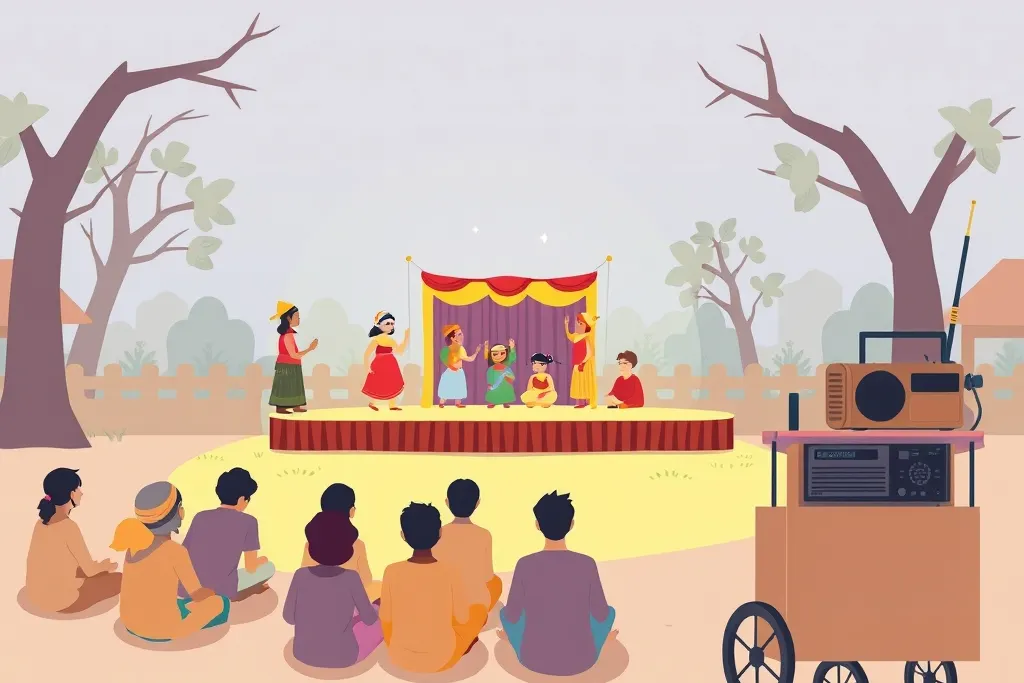
2. Development Journalism
Development journalism reports on development: schemes, health, education, farming, environment, rights and the problems of the poor, not only conflict and crisis. It asks whether programmes reach people, explains policy in plain language, checks claims against facts, gives voice to ordinary people and follows up. Its aims are to inform and educate, to hold the authorities accountable and to mobilise participation. Its risks are becoming a mouthpiece for government publicity and presenting bare statistics without human stories; good development journalism combines data, voices on the ground and analysis. Journalism for rural audiences uses simple language, local examples and the language of the audience, in newspapers, radio and increasingly mobile and social platforms.
Development journalism reports on development: schemes, health, education, farming, environment, rights and the problems of the poor, not only conflict and crisis. It asks whether…
3. Corporate Communication and Public Relations
Corporate communication is the management of all communication an organisation sends out and takes in, so that it presents a consistent identity and builds relationships with its internal public (employees: notice boards, newsletters, intranet, meetings, town halls) and external publics (customers, investors, suppliers, regulators, the media and the community). Public relations is its relationship-building arm: media relations (press releases, conferences, interviews), events, publications, corporate social responsibility (CSR), reputation and crisis communication. In India, under Section 135 of the Companies Act, 2013, a company above a threshold of net worth, turnover or profit must form a CSR committee and spend at least 2 per cent of its average net profit of the previous three years on CSR activities such as education, health, sanitation and environment; its CSR report is a communication tool as well as a legal duty.
| Public | Typical tools | Aim |
|---|---|---|
| Employees (internal) | Newsletter, intranet, meetings, notice board | Morale, clarity, loyalty |
| Customers | Advertising, website, helpline, social media | Trust and sales |
| Investors and regulators | Annual report, disclosures, meetings | Confidence and compliance |
| Media and community | Press release, events, CSR projects | Reputation and goodwill |
Corporate communication is the management of all communication an organisation sends out and takes in, so that it presents a consistent identity and builds relationships with its internal…
4. Worked Examples
Example 1. A health department wants to raise vaccination in a tribal block. A top-down campaign would put up posters and a radio spot in the official language; a participatory one would involve local health workers and village leaders, use puppet shows in the tribal language, ask mothers why they are reluctant, and adjust the message and the vaccination timings; the second is more likely to change behaviour. Example 2. A company with an average net profit of ₹50 crore over three years and above the CSR threshold must spend at least 2 per cent = ₹1 crore on CSR in the year. Example 3. A new employee policy is announced by notice board only and staff are confused; the failure is of internal communication and the remedy is a two-way channel such as a briefing meeting and a question-and-answer sheet. Example 4. A reporter investigates whether the drinking-water scheme actually reaches a village, talks to residents, checks the official claim and publishes the result: development journalism.
Example 1. A health department wants to raise vaccination in a tribal block. A top-down campaign would put up posters and a radio spot in the official language; a participatory one would…
5. Worked Examples: Cost per Contact and the Adoption Curve
Communication campaigns are judged by what they cost and whom they reach. A campaign that spends ₹50,000 and reaches 20,000 people has a cost per contact of 50,000 / 20,000 = ₹2.50. A cheaper medium is not always better, because the question is whether the right people were reached and whether their behaviour changed, which is the aim of development communication. Extension workers also use diffusion of innovations, in which Everett Rogers described how a new practice spreads through a community in five groups: innovators (2.5 per cent), early adopters (13.5 per cent), early majority (34 per cent), late majority (34 per cent) and laggards (16 per cent).
| Group | Share | Farmers |
|---|---|---|
| Innovators | 2.5% | 25 |
| Early adopters | 13.5% | 135 |
| Early majority | 34% | 340 |
| Late majority | 34% | 340 |
| Laggards | 16% | 160 |
Communication campaigns are judged by what they cost and whom they reach. A campaign that spends ₹50,000 and reaches 20,000 people has a cost per contact of 50,000 / 20,000 = ₹2.50. A…
Public Relations and Advertising Distinguished
Corporate communication serves several publics: employees, customers, investors, the government and the community. Public relations builds goodwill with all of them through press releases, events and responsible conduct, and it is not paid space in the way advertising is. Development journalism reports on development projects and their effect on ordinary people, holding programmes to account, and a good development story names the beneficiary, gives numbers and reports the problems as well as the success.
Corporate communication serves several publics: employees, customers, investors, the government and the community. Public relations builds goodwill with all of them through press releases…
Models of Extension Communication
Extension communication follows a process: the extension worker identifies a need, selects a message and a medium, delivers it, and checks feedback. Methods are individual, such as a farm visit, group, such as a demonstration or meeting, and mass, such as radio or posters, and the right choice depends on the audience size and the complexity of the message. A demonstration is especially effective because people see the result for themselves.
- Identify a need
- Select a message and a mediumDepends on audience size and complexity
- Deliver it
- Check feedback
Extension communication follows a process: the extension worker identifies a need, selects a message and a medium, delivers it, and checks feedback. Methods are individual, such as a farm…
Key takeaways
- Development communication plans communication for social and economic development; extension carries knowledge to people; participatory models involve the community.
- Extension uses individual, group and mass methods; folk media, radio, community radio, Krishi Darshan and the Kisan Call Centre reach rural audiences.
- Development journalism reports on development, checks claims, gives voice to the poor and holds authorities accountable.
- Corporate communication covers internal and external publics; PR builds relationships through media, events and CSR.
- Section 135 of the Companies Act, 2013 requires eligible companies to spend at least 2 per cent of average net profit on CSR.
Practice questions (24)
Attempt each one before opening the answer. Every explanation names the tempting wrong option as well as the right one, because that is where marks are lost.
Puppetry, street theatre and folk songs used in extension are called:
Show answer
Answer: A — Folk media
Folk media are traditional forms that reach people in their own idiom. They are not mass media in the technological sense.CSR spending under Section 135 of the Companies Act, 2013 is at least what share of average net profit?
Show answer
Answer: D — 2 per cent
Eligible companies spend at least 2 per cent of average net profit of the preceding three years.The Kisan Call Centre, giving farmers expert advice by phone, began in:
Show answer
Answer: C — 2004
The Kisan Call Centre started in 2004. 1952 is the Community Development Programme.
Show the other 21 questions
Which is an internal communication tool of an organisation?
Show answer
Answer: B — Employee newsletter
A newsletter reaches employees, the internal public. The others address external publics.Participatory communication differs from the top-down approach in that it:
Show answer
Answer: A — Involves the community in identifying problems and designing messages
Community involvement is the defining feature. It is usually slower but the change is owned and lasts.A demonstration in a farmer's field to a gathering of neighbours is an example of a:
Show answer
Answer: D — Group extension method
A method demonstration to a group is a group method. A single home visit is individual and radio is mass.The Indian policy that first allowed well-established educational institutions to run community radio dates from:
Show answer
Answer: C — 2002
The 2002 policy first allowed educational institutions to run community radio, and NGOs were included from 2006. 1957 is Vividh Bharati.Development journalism chiefly:
Show answer
Answer: B — Reports on development and checks whether schemes reach people
It examines the delivery and effect of development, giving voice to those affected. Copying press notes is publicity, not journalism.A company has an average net profit of ₹80 crore over three years and is covered by the CSR rule. Its minimum CSR spend for the year is:
Show answer
Answer: A — ₹1.6 crore
2 per cent of ₹80 crore is ₹1.6 crore. ₹8 crore would be 10 per cent.Statement 1: Extension carries knowledge to people and brings their problems back for research. Statement 2: Corporate communication addresses only customers. Which is correct?
Show answer
Answer: A — Only statement 1
Statement 1 is correct. Statement 2 is false: corporate communication covers employees, investors, regulators, media and the community too.The Community Development Programme, an early top-down effort in rural development, was launched in:
Show answer
Answer: B — 1952
The Community Development Programme began in 1952. The year 1967 is the tempting wrong option because it is the year Krishi Darshan began on Doordarshan, a later broadcast effort.Which of the following is a MASS method of extension?
Show answer
Answer: C — Radio
Radio reaches a very large audience at once, so it is a mass method. Method demonstration is the tempting wrong option because it can draw a crowd, but it is a group method for a small gathering.The Satellite Instructional Television Experiment (SITE), which carried programmes to villages by satellite, was conducted in:
Show answer
Answer: D — 1975-76
SITE ran in 1975-76. The year 2002 is the tempting wrong option because it is the year community radio opened to educational institutions, another communication milestone.Match the extension method with its category. List I: A. Home or farm visit B. Demonstration C. Radio D. Puppetry and folk songs List II: 1. Individual method 2. Group method 3. Mass method 4. Folk media
Show answer
Answer: A — A-1, B-2, C-3, D-4
Home visit is 1, demonstration 2, radio 3 and puppetry and songs 4. The pair C-4, D-3 is the tempting swap, because folk songs are broadcast on the radio too, but radio is the channel and folk media is the traditional form.Match the adopter category in the diffusion of innovations with its share of the community. List I: A. Innovators B. Early adopters C. Early majority D. Laggards List II: 1. 34 per cent 2. 13.5 per cent 3. 16 per cent 4. 2.5 per cent
Show answer
Answer: B — A-4, B-2, C-1, D-3
Innovators are 2.5 per cent (4), early adopters 13.5 (2), early majority 34 (1) and laggards 16 (3). The pair A-2, B-4 is the tempting swap, as both are small groups at the front, but the very first and smallest group, 2.5 per cent, is the innovators.Read the statements on community radio in India.
(1) Community radio was first allowed to established educational institutions in 2002.
(2) It was opened to non-profit organisations from 2006.Show answer
Answer: C — Both 1 and 2
Both statements are true. "1 only" and "2 only" tempt for those who remember only one of the two dates.A company announces a new leave policy only on the notice board, and staff remain confused. The best improvement is to:
Show answer
Answer: A — Add meetings and a two-way channel where staff can ask questions
Confusion needs explanation and feedback, which meetings and two-way channels give. Larger letters is the tempting wrong option because it improves visibility, but the problem is understanding, not sight.A reporter checks whether a rural road scheme has actually reached a village, using official data and the voices of villagers. This is an example of:
Show answer
Answer: B — Development journalism
Following whether a programme reaches people, with data and voices on the ground, is development journalism. Government publicity is the tempting wrong option because the story concerns a scheme, but publicity only presents the official claim.A company covered by the CSR rule has an average net profit of ₹125 crore over three years. Its minimum CSR spending for the year is:
Show answer
Answer: C — ₹2.5 crore
Two per cent of 125 crore is 2.5 crore. Check: 1% is 1.25 crore, and double that is 2.5. The ₹1.25 crore option is the tempting error of taking one per cent.Assertion (A): Participatory communication is more likely to change behaviour than a top-down campaign. Reason (R): It involves the community in shaping the message and listening to their reasons.
Show answer
Answer: A — Both A and R are true, and R is the correct explanation of A
Both are true and R explains A. The second option tempts since R seems to be only a description of the method, but involvement is why people accept the message.Campaign A spends ₹90,000 and reaches 30,000 people. Campaign B spends ₹60,000 and reaches 15,000 people. Which is cheaper per contact, and by how much?
Show answer
Answer: A — A, by ₹1 per contact
A costs 90,000 / 30,000 = ₹3 and B costs 60,000 / 15,000 = ₹4 per contact, so A is cheaper by ₹1. Check: 3 x 30,000 = 90,000 and 4 x 15,000 = 60,000. B is the tempting wrong option because its total spend is lower, but the question is about cost per contact.In a village of 800 farmers, how many are expected to be in the early majority, late majority and laggard groups together?
Show answer
Answer: D — 672
These groups share 34 + 34 + 16 = 84%, and 84% of 800 = 672. Check: innovators and early adopters are 16%, which is 128, and 800 - 128 = 672. The 544 option is the tempting error of leaving out the laggards.Consider the statements on corporate communication.
(1) Corporate communication serves both internal and external publics.
(2) Public relations is paid space bought in the media.
(3) Section 135 of the Companies Act, 2013 requires qualifying companies to spend at least 2 per cent of average net profit on CSR.Show answer
Answer: C — 1 and 3 only
Statements 1 and 3 are correct. Statement 2 is false: paid space is advertising, whereas public relations earns goodwill through releases, events and conduct. "1, 2 and 3" tempts for those who treat PR and advertising as one.Assertion (A): The medium with the lowest cost per contact is always the best for a communication campaign. Reason (R): Success also depends on whether the right people were reached and their behaviour changed.
Show answer
Answer: D — A is false, but R is true
A is false: a cheap medium can reach the wrong people. R is true. The second option is the tempting choice because R is true, but it contradicts A rather than supporting it.